July is the season of sunshine, strawberries and long evenings well-suited to sport – at least, that’s the idea. Whatever the weather, one thing that remains a British summer stalwart is Test Match cricket, whether it’s played amidst the English showers or carried to our ears from far-flung parts of the cricketing world. Indeed, the latest five-day Test between England and the West Indies begins at Lord’s today. But this summer, after sixty-seven years, for the first time Test Match Special is not available to analogue radio listeners.
“Long wave delivers when DAB and mobile phones do not. I shall miss Test Match Special“
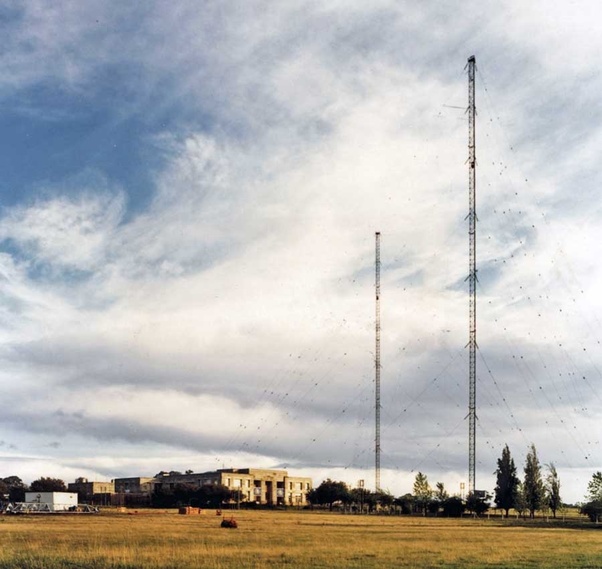
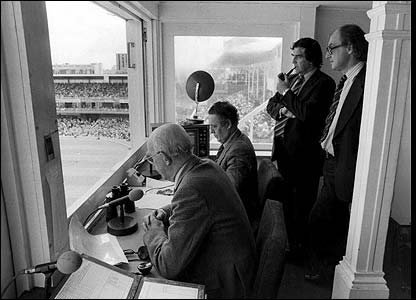
Originally broadcast during the daytime on the medium-wave frequencies used by the BBC Third Programme, TMS has been providing ball-by-ball commentary to cricket fans since 1957. Since 1994, it has been a stalwart feature of the Radio 4 Longwave summer schedules, replacing the usual Radio 4 content on 198 kHz longwave during test matches. Indeed, longwave became for a time a byword for cricket for many radio users, who enjoyed the ease and convenience of tuning in to the national signal broadcast from a handful of transmitters. The world-famous commentary, relayed with a particular analogue quality on a tinny transistor radio, has become for many one of the quintessential sounds of summer. Listeners abroad across northern Europe and beyond also benefited from the long reach of longwave transmissions, providing a convenient link to home for many a cricket-loving traveller.
Sadly, all these features are now merely memories, as TMS transitions to an all-digital future. The programme has been available on digital radio since 2002, and in 2023 the BBC decided to withdraw TMS from longwave, denying access to the programme to thousands of analogue radio users. This summer, for the first time, it is only available to listeners digitally on BBC Radio 5 Sports Extra or via the internet, a move that former England cricket captain Sir Geoffrey Boycott referred to as ‘dreadful’. Henry Blofeld, who was a TMS commentator for 45 years, told the Daily Telegraph: ‘Anything that restricts the coverage of TMS and the amount of people who are going to listen to it is extremely sad.’ The charity Age UK has also expressed concern about the denial of sports coverage to older listeners who may have been using older analogue radios for decades.
The decision comes as part of a withdrawal of separate longwave scheduling, bringing Radio 4 Longwave into line with Radio 4 FM, which has never carried cricket coverage. Daily Service and Yesterday in Parliament left longwave earlier this year, and TMS has not returned to its home with the beginning of the cricketing season. Whilst standard Radio 4 continues on longwave for now, the BBC’s stated intention is to withdraw longwave broadcasts entirely in 2025.
“198Khz LW provides me with the wonderful TMS – a welcome lifeline for me”
However, the BBC has faced calls to cancel its plans to withdraw longwave, for a variety of reasons. Listeners beyond the UK and in rural areas poorly served by digital radio continue to rely upon the analogue longwave transmissions. In an age of increasing international tension, the importance of longwave as a piece of critical national infrastructure is recognised as never before, as the signal is extremely difficult to block – unlike the internet, which is by comparison very vulnerable to attack. Furthermore, the BBC has already had to postpone shutting down longwave, originally slated for June 2024, because of the reliance of thousands of electrical heating systems on the longwave time signal to function properly.
It is now impossible to listen to the Test Match in real time.
From the perspective of sports fans, one often-forgotten feature of analogue radio is its ability to provide real-time coverage of events. Where digital radio and television involve a delay of around 20 seconds between broadcast and reception, and online platforms such as BBC Sounds can involve a delay of up to a minute, only on analogue radio can you hear coverage at exactly the same time as it is spoken. Digital-only coverage therefore means always being behind the action as it happens. It is now impossible to listen to the Test Match in real time.
With these concerns in mind, a petition set up by the Campaign to Keep Longwave for the BBC to cancel the closure altogether has reached over 3500 signatures, with comments coming in from all quarters in favour of the platform. One signatory to the petition commented, ‘Long wave delivers when DAB and mobile phones do not. I shall miss Test Match Special.’ Another said that longwave is ‘still the best way to follow Test Match Special on the beach, in a field, or if you are not computer confident.’ A Welsh signatory lamented, ‘DAB reception my area is all but nonexistent. There is no mobile phone signal either. Thus 198Khz LW provides me with the wonderful TMS – a welcome lifeline for me.’
It is hoped that the new Labour administration in the UK will prove more supportive than its predecessor at retaining this much-loved stalwart of British broadcasting. In the meantime, listeners are called upon to sign the petition and keep up the pressure on the BBC. Who knows? Maybe one day cricket commentary will return to its former home and resume its melodic accompaniment to the British summer, back where it belongs on Radio 4 Longwave.


 Keep Longwave
Leave a comment