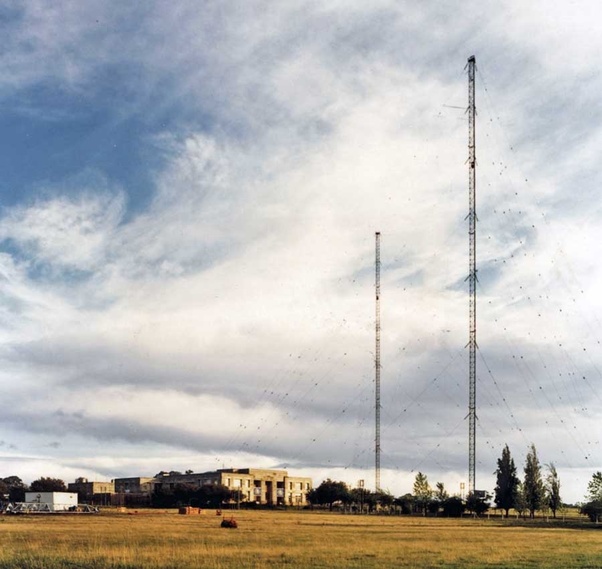
Radio 4 Longwave will NOT go quiet at the end of June, BBC suggests

Published by

on

The BBC has suggested that its Radio 4 Longwave service will not be shut down at the end of this month, as had been feared. Whilst the Radio Teleswitching Service (RTS) broadcast alongside the channel on 198 kHz LW is being phased out over the summer, Radio 4 Longwave will continue to broadcast until an ‘impact review’ is carried out. Until recently, it had been assumed that both services would end together on 30th June, as had been reported in some online news articles.

The news is music to the ears of longwave listeners and supporters, many of whom signed a 5000-strong petition to keep the platform, handed in to the BBC last week. It is not clear whether the BBC had always intended to carry out an ‘impact assessment’ before shutting down longwave, or whether unexpected pressure from the public have caused a change of tack. A public consultation, and a rigorous examination of how many listeners there are to Radio 4 Longwave, were key recommendations of the recent report Still Speaking to the Nations, published by the Campaign to Keep Longwave and seen by the BBC.

The corporation has previously assumed that listenership is ‘low’ on longwave, and that few people would be affected by a switch-off. It may be that messages from rural and international listeners, and those concerned about national security, have caused a change of policy. As has been pointed out, the BBC has a duty to serve all parts of the United Kingdom, and some areas are very poorly served by FM and digital signals.

In personal correspondence seen by the Campaign to Keep Longwave, a BBC representative stated, ‘we have not made a firm decision as to when we will close the Radio 4 LW service’. With reference to the end of separate programmes on longwave from March 2024 (including the end of Test Match Special on analogue radio), he added, ‘these changes will inform an impact assessment we will undertake later this year, after which a final decision on closing Radio 4 LW will be made.’ In a marked contrast to recent correspondence from the BBC, the representative also admitted, ‘I accept Radio 4 LW is a useful platform’.

At present, it remains unclear how long the reprieve on Radio 4 Longwave will last, or whether the BBC will shelve plans to axe the service amid mounting pressure to do so. The energy-efficiency, resilience and wide reach of longwave have all been lauded by supporters, and listeners in Ukraine have testified to the importance of the only BBC broadcast that reaches a European continent once again afflicted by war.

Listeners may have noticed that the power output of the signal from the main Droitwich transmitter has been reduced slightly in recent weeks. This is because of reduced interference from other signals in the LW band, and allows the Droitwich signal to reach the same area with lower energy costs. As well as making longwave even more efficient when compared to other platforms, this means that the running costs for longwave are also lower for the BBC, and that the valves used in the transmitter are likely to last longer. All of this bodes well for the continuation of the service, given that the main reason given for ending it was to cut operating and maintenance costs.

The petition to keep Longwave is still open and receiving signatures. The BBC has not yet responded to a request to comment on when the ‘impact assessment’ for closing Radio 4 Longwave is likely to take place.

42 responses to “Radio 4 Longwave will NOT go quiet at the end of June, BBC suggests”

  1. John Pearse Avatar
    John Pearse

    Well done.

    Liked by 1 person

  2. Kate Avatar
    Kate

    keep.up.the pressure. Not everyone gets a good digital signal contrary to the what the BBC says. People in small villages rely on the signal as it is

    Liked by 2 people

    1. Adrian jarrett Avatar
      Adrian jarrett

      great news , I have bought 1955 sunbeam talbot with original radio still working ,so I can still listen to LW and MW. What is the news on MW, radio Caroline still going on 648 MW from old BBC world service transmitter at Orffordness on Suffolk coast Adrian

      Like

  3. Caleb Price Avatar
    Caleb Price

    That’s fantastic news, Tobias! Thank you for all your commendable efforts in leading this campaign and presenting such well structured arguments for the retention of the Longwave service. Let’s hope the Beeb see sense!

    Liked by 1 person

  4. Dr Lars Mosesson Avatar
    Dr Lars Mosesson

    Please keep up the campaign to keep the long-wave service, principally as it is more reliable in our part of Hampshire for Radio Four, as well as it should make TMS available again.

    Liked by 1 person

  5. jameschampion Avatar
    jameschampion

    Well done on all you have achieved so far, and please keep going. I listen to BBC Radio 4 on 198LW in my car in northern France, as I have done during my working years in Germany, Belgium and the Netherlands. There is no possibility of hearing Radio 4 on FM on the continent, and long wave transmissions are the only option outside the UK. I will greatly miss it if it is switched off.

    Liked by 1 person

  6. Wes K Avatar
    Wes K

    Excellent news. I called Ofcom earlier today to see if I could lodge a complaint with them about the planned LW closure. Apparently you need to directly complain to the BBC and if they do not resolve the complaint, then it can be raised with Ofcom. So, I still think it is worth complaining directly to the BBC.

    Complaints are logged here:

    https://www.bbc.co.uk/contact/complaints

    Like

  7. Barry Young Avatar
    Barry Young

    I’m still annoyed by the loss of TMS on LW but a continuation of other Radio 4 services on LW would be greatly welcome.

    Liked by 1 person

  8. Rhys Thomas Avatar
    Rhys Thomas

    If one sideband was suppressed, but the carrier was still radiated, some 1/6 of total power would be saved. But would the received signal sound reasonable on an unmodified AM receiver?

    Like

    1. Laurence Avatar
      Laurence

      It’s receiveable, but the volume is low because you’ve only got half the information. Much better economy would be obtained by install a new more efficient solid state transmitter.

      Like

    2. Christopher Clifton Avatar
      Christopher Clifton

      Given that SSB (Single Side Band) receivers cope quite well, at least for communications quality, speech only transmissions with no carrier transmitted at all. The carrier frequency being replaced by an oscillator in the receiving set. I’d guess that quite acceptable audio might be received by a standard AM receiver. The main problem with SSB audio quality is that if the local oscillator isn’t tuned precisely to replace the missing carrier, the pitch of the received audio will be shifted. This is why SSB is used for speech only, any pitch shift would be disastrous for a music program. If the carrier is sent from the transmitter, there will be no local oscillator to go out of tune, or be mis-tuned by a clumsy operator.

      Like

    3. fullysong71d85a04d1 Avatar
      fullysong71d85a04d1

      In theory, suppressing one sideband to reduced transmitter power consumption would work, but most ‘consumer’ radios don’t have a synchronous detector, thus tuning in accurately enough to avoid the ‘Donald Duck’ syndrome would be very difficult. Also suppressing the carrier to leave just a single sideband (SSB) is only any good for low quality speech applications such as Amateur Radio or C.B. Music on SSB is a complete no-no. It would sound terrible. One big issue with continuing with Long Wave from Droitwich is the availability of the very high power klystron valves. It may be that by now, no valve company is producing them any more, and, like valves in yesteryear’s domestic electronics, they don’t last forever. I read mention on this site of a “solid state” longwave transmitter. I may be wrong, but I don’t think that solid state (i.e. transistorised) kit is available that can transmit at 500 kilowatts into the feeder which is what Droitwich long wave is rated at. But I’m not fully up to date on these matters. It is a fact that valves are far more electrically robust than solid state devices, i.e. they can survive horrendous voltage surges more easily that solid state devices.

      Like

      1. robert hawkin Avatar
        robert hawkin

        I do PVC fabric welding, it uses a similar technology. recent advances in power field effect transistors (that can be used in parallel) mean 500kW is simple these days. they are a like for like replacement for a valve, except are cheaper, available, much much less fragile, and do not use a heating element, so are much more efficient. the energy savings more than pay for the changeover. maybe ask relco in watford.

        Like

      2. John Smith Avatar
        John Smith

        Klystrons were only used for UHF and above, they would never work on long wave as they have to be several wavelengths long.

        Like

  9. Julian Blakesley Avatar
    Julian Blakesley

    Well done with your efforts to preserve Radio 4 LW Tobias. I do hope the pressure continues to grow on the BBC to keep this wonderful service for us all, it’s an important part of our heritage and vital to our security. This is wonderful news to the vintage radio restoration community.

    Liked by 1 person

    1. Michael Moloney Avatar
      Michael Moloney

      I completely agree. I have a vintage radio collection and was horrified LW was to be turned off. I hope this reprieve stays for good.

      Liked by 1 person

  10. John Avatar
    John

    Fantastic news. Let’s hope it’s very long term.

    Liked by 1 person

  11. Geoff Booth Avatar
    Geoff Booth

    One can but hope the BBC, running a public service, are now thinking outside the box, it’s not all about saving money, serving the listener is priority number one.

    Like

  12. Peter F Vaughan Avatar
    Peter F Vaughan

    I listen to R4 on LW quite a bit – reception is good in North Devon!

    I signed the petition.

    I do note the BBC doesn’t include LW in the station announcement, “This is BBC Radio 4 on FM, DAB, and online…” and hasn’t done so for several months. That isn’t good marketing!

    Liked by 1 person

    1. Simon Drake Avatar

      they are far too busy telling us what can be heard on BBC sounds. It’s a useful service- most of the time, but there are times when it won’t work reliably, and simply turning on a radio is far easier.

      Like

  13. Graham Compton Avatar
    Graham Compton

    Brilliant news! Long Wave gets through when nothing else does. The UK has to have a presence there as a communication route of last resort. I seem to remember that the German long wave time signal station, DCF, has the facility for adding emergency information; BBC long wave Droitwich is ours. Is the transmitter/aerial system listed? It should be.

    Liked by 1 person

  14. Anne Vickerson Avatar
    Anne Vickerson

    Excellent news, well done! At least they seem to be listening to the concerns of their LW audience.

    Liked by 1 person

  15. David Mawby Avatar
    David Mawby

    I am surprised that very few people, if any, have mentioned that Droitwich 198 was used for several decades to broacast the BBC’s early morning Russian language broadcast at 03.45 GMT. This clearly demonstrated the Corporation’s faith that this Long Wave transmission would not attract jamming. It with some amazement that Droitwich isn’t used for a night time or early morning transmission in Ukranian.

    Liked by 1 person

    1. Andrew Rowland Avatar

      I believe that, at least when Droitwich was on 200kHz, the frequency was shared by Moscow, Leningrad (St Petersburg) and Warsaw, so had to be powerful enough to overcome their interference for the home audience. Perhaps those early-morning broadcasts were intended to precede Moscow’s own programming and reach a Russian audience already tuned in to that frequency. Pure specdulation, of course. On the other hand, if Moscow wanted to drown out the BBC, they only had to bring their own transmitter up to full power earlier in the day…

      (My information comes from a discussion of the receiving antennas at Pontop Pike that monitored Droitwich and Westerglen, which had to reject interference from those three sources.)

      Like

  16. andyrutterceff104e84 Avatar
    andyrutterceff104e84

    Last Sunday morning I drove past the Droitwich Transmitter twice (with R4 on the car radio) and wondered if the BBC would reply to the petition. So very well done to yourself and the others who have signed it. Hopefully the Beeb realise the value of an older (and historic in so many ways) radio broadcast system that shouldn’t be ‘thrown out with the baby in the bathwater!’ I would hope that the Beeb have some better way of discussing this with the public at large by actually having their own piece on their news about Long Wave and a general discussion that also includes the issue of national security. The Nordic & Baltic Nations are particularly informative of what citizens should do in the event of National Emergency that not only includes food for 72 hrs, but a battery radio. What better, as long as radio manufacturers include LW, to have that as your home information device. There must be thousands of radios in homes around the UK that have LW, even though there’s been a trend to have the latest smart speaker or listen on the internet, etc. A survey perhaps by the BBC might find out how many homes still have or use older radios, etc? It would also be an opportunity for R4 LW to be as distinctive as it was until recently, with TMS & The Shipping Forecast, Morning Service, etc.

    Liked by 1 person

  17. Brian Dawson Avatar
    Brian Dawson

    Find some valves and keep it going It is the very SOUL of British broadcasting.

    Like

  18. Duncan Avatar
    Duncan

    I suspect that this is due to Radio Teleswitch replacement being well behind schedule. The BBC are reporting today in their business section that 314000 people were in danger of having their heating permanently stuck on or off yet don’t mention that it is the R4 LW transmission which controls that.

    Like

  19. Anon Avatar
    Anon

    This week we had the cringe worthy experience of a BBC Radio 4 newsreader announcing that BBC Radio 4 would not be going off air on 30th June, without actually using the terms “BBC” or “Radio 4” in the sentence. I had hoped that Fridays’ edition of “Dead Ringers” would rectify this, and include a sketch about a superhero called 198-Longwave-Man who flies in to rescue the UKs’ domestic hot water supply from the evil villain OFGEM. Perhaps, they can include this in next weeks’ programme (I am looking at you Jon Culshaw).

    The longwave extension was predictable and a result of the RTS replacement being characteristically asymptotic… I will pause for a few seconds while the Minister for Energy looks up the word asymptotic… OFGEM, in their demands have assumed that the campaign can be achieved in a linear fashion with a defined number of meters replaced every month, but that fails to factor in the three main obstacles involved:

    1) Geographical location of RTS customers.
    2) Willingness of a customer to accept a SMART meter.
    3) Technical capability of a SMART meter to work in a certain location.

    The reality is that any number of these three factors can combine to make one RTS meter orders of magnitude harder to replace than another one. The mitigation for this lack of understanding has been to announce a “phased” turn-off of the signal. Let’s unpack that statement: Imagine you make a daily two hour train journey to feed the ducks at a favourite duck pond. In your bag, you have a mixture of bread crumbs; wholemeal, granary, white, rye etcetera. You decide to do a phased turn-off of your duck feeding by excluding one type of crumb from the mix at a time. The cost of the breadcrumbs is insignificant; they are just the waste product of a weeks’ sandwich making. But you are still making that two hour daily train journey to the pond! Through this analogy we can see that the phased switch-off of the RTS signal is a red herring. The 198 kHz transmitters have to remain working right down to the last RTS meter. This phased approach has two purposes, the first of which is to white-wash over the spectacular failure of stakeholders to understand the problem; the second is a test to try and determine whether they actually know what they are doing. By initially excluding just 600 RTS meters from the main switching signal, as planned, they may detect nothing, or perhaps a very small disaster which can be kept out of the newspapers. This is like practicing bomb disposal on a kids’ fire cracker.

    The implications of premature RTS switch-off works in two directions: – Towards the BBC, OFGEM and power utilities it could include legal action from customers, industry fines and (shock-horror) failed annual performance reviews for civil servants. Towards energy customers the implications are potentially life threatening. Imagine having your storage heaters locked on in last week’s heatwave, or being frozen to death on a Scottish island in December with no electricity.

    Disentangling RTS from BBC Radio 4 is administratively impossible. The UK Frequency Allocation Table, under footnote 15 gives permission for Radio Tele-Switching to be included in BBC Broadcasts. Note here the words “BBC” and “Broadcast”. Turning off BBC Radio 4 and running just a weak carrier wave to support tele-switching would require Energy UK to apply for an OFCOM spectrum license. Since this would be a purely industrial use of spectrum and not broadcasting, the signal would have to be transmitted somewhere just below 150 kHz. In fact, once familiar longwave broadcast transmitters at Magdeburg and Lakihegy, together with Mainflingen are busy today with many tele-switching tasks, including managing renewable energy and street lighting control across central Europe. You can’t hear them because they are tuned a fraction below the dial on your kitchen radio. With UK RTS meters all locked to 198 kHz, your daily Economy 7 tariff has to come with a compulsory episode of The Archers by law. Any other arrangement would involve a rule change by OFCOM; a branch of the UK civil service, which in itself, has implications regarding the amount of time that would be taken to reach a resolution. Use of a broadcast frequency for a non-broadcast purpose would also require clearance from the ITU, an international coordinator for radio spectrum. Only France has such an arrangement on longwave and such things take time.

    Whatever the power utilities may have committed to on paper, or signed up to as part of an OFGEM aspiration, the measured reality is their real-world resources support an RTS replacement of around 200,000 units per year. Extrapolating this and accounting for the impediments to replacement already defined means Radio 4 would need to remain on air until about 2030, had that earlier pace been maintained. As the last year has shown, SHOUTING at the power utilities does not work. More SHOUTING is not going to work either. There are no practical reasons for accelerating the RTS switch off, and doing so is dangerous. With regard to technical functionality, Droitwich, Westerglen and Burghead on 198 kHz are proving their superiority. The UK has an oven-ready spectrum regulation to leverage continued use of digital data for many other purposes on this BBC broadcast, the value of which outweighs the short term cost implications of a brand new solid state transmitter at each site, or the inconvenience of new users having to apply for their own spectrum licenses.

    Meanwhile, BBC Radio 4 LW has been treated like an embarrassing secret, never to be mentioned in plain sight. How ironic then that the very technology assumed to be making it redundant is doing the precise opposite. Coming to mind are three extremely influential Youtubers, running channels with viewing figures to beat some BBC output. Digital media is propelling Radio 4 on 198 kHz to the status of National Treasure. The BBC has missed the boat; if they wanted to get rid of it, the optimum time would have been over a decade ago. Longwave listenership has probably rocketed since the start of this campaign. Media and the way humans interact with it is complex, not the zero sum view of BBC management. We don’t really delete the past; we repurpose and incorporate it into the present. Go on – just say it – “On your Smart Speaker & BBC Sounds, on 92-95 FM & 198 Longwave, you’re listening to Radio 4”.

    Liked by 1 person

    1. Elizabeth Avatar
      Elizabeth

      Thank you: a rival to Parkinson’s Law, and oh so (unfortunately) true. Elizabeth.

      Like

  20. Julian M Stancliffe Avatar
    Julian M Stancliffe

    My DAB radio in my van cuts out more than before while listening to Radio X in the morning In places where it used to not drop out

    Like

  21. Durma Zoni Avatar
    Durma Zoni

    We need 198 KHz here in the North of France. Solid reception 24/7. It would be BBC-exit situation. Please do not make it any worse by switching off Radio 4 on long wave tomorrow.

    Like

  22. Willem Avatar
    Willem

    Still not too late to preserve what we might desperately need in the future. The range of this iconic station is fantastic, downside without any doubt is that very few people now have a radio with MW, let alone LW. They are available however but it remains to be seen if it is not too late already. My fear is that that’s the reality. Thank you, EU. For promoting digital and phasing out trusted techniques. No more AM in cars’ head units is a direct result of this EU policy. Anyway, no use ranting about that here.

    Like

  23. Roy Durrant Avatar
    Roy Durrant

    I have always listened to 198kHz here near Toulouse, a good signal even with reduced power. There are still two French speaking stations on Longwave but interestingly are not French, Algeria and Morocco keep their transmitters running for their nationals that are abroad. Allouis in central France is very powerful but has an empty carrier and unfortunately just transmits time signals for French railways etc. Keep up the good work!!

    Like

  24. Don Avatar
    Don

    Pleased to hear that 198 has got a reprieve, if only temporary.

    However, I guess EDF will still charge me full price for Economy 7 unless I let them fit a so called Smart Meter!

    Like

  25. David Smith Avatar
    David Smith

    Whilst the hypocritical BBC peddle excuses and spin lies about ‘digital being so much better than analogue’ (the fact being the whole country and Western Europe can be covered with Droitwich, Burghead and Westerglen compared with hundreds and hundreds of burbling DAB transmitters) Radio Caroline are saying ‘fiddlesticks’ and is committed to its own 648kHz transmitter in Suffolk which is actually listened to by loyal Caroline listeners such as myself. This transmitter was originally a BBC transmitter for its European arm of the World Service, until they fell into the anti-analogue diktat which commercial broadcasters have followed like sheep with. Gold on 1548kHz was a major loss, as was the 252 transmitter in Ireland.

    The BBC are so obsessed with youthism they can’t even grant R2 a station that plays music from the best era in creative British music! (as has riled Mr. Blackburn).

    Not Caroline. They should have the LW channel if the BBC don’t want it as they’re doing the honourable thing here with 648kHz, its unique programme format as Europe’s ONLY album music station with oldies weekends every month which it also broadcasts on Manx Radio’s AM channel of 1368kHz

    Then it would be ‘Caroline on 199 just like it was in happier times for Britain and Europe (albeit in kHz not metres!)

    Like

  26. valveman365 Avatar
    valveman365

    I’m not sure what’s happened to it but the 252 transmitter used by RTE1 was reasonably modern, high powered and not in use anymore. Not sure if it’s been scrapped though.

    Like

    1. Anamyd Mailliw Avatar
      Anamyd Mailliw

      The mast was felled in 2023, not long after RTE1 252 LW went off air that year.

      Like

  27. BluRay Avatar
    BluRay

    Apparently there is an end-date now of 26/09/2026, as per Youtube video by Ringway Manchester

    Like

    1. t_thornes Avatar

      This hasn’t been confirmed yet by the BBC.

      Like

  28. Louvain Beer Avatar
    Louvain Beer

    I have recently moved to Weardale and can only get Radio Four on long wave I now have two DAB radios and one FM that are utterly useless. This area is prone to power cuts in winter-what use is BBC sounds then?

    Like

  29. andrewfrew Avatar

    Whoa, keep it up, LW BBC 4, is the best reachable British radio station in the world, and the real reason to turn on and play my old British made HACKER RADIO!

    Like

  30. TJ Froggatt Avatar
    TJ Froggatt

    OVO have been pestering me for months to change my RTS off-peak meter. I don’t have one: my off-peak meter was installed before RTS existed and is controlled by a clock. (And I’ve stopped using my storage heaters anyway!) The delayed switch-off of 198 just means that they will go on pestering me 😉

    But I do support keeping 198. I visited the transmitter on an open day over 60 years ago. All of our house & car radios can receive it, whereas DAB does not work well here and FM is not very strong. And we do listen sometimes from the continent.

    Like one of the earlier posters, I do wonder why the BBC techical department can’t design a solid-state half-megawatt transmitter. Some decades back, they built an impressive solid-state analogue device for interpolating 625 line TV to 405 lines.

    Like

Leave a comment