There is often an assumption nowadays that newer is always better, and when it comes to television and radio that ‘digital is best’. The BBC itself admits to having a ‘digital first strategy’, investing in BBC Sounds and BBC iplayer and apparently planning to shut down all its analogue radio broadcasts, as was done for television in the years running up to 2012.
But radio is not television. Analogue radio does not necessarily suffer from the same quality issues that hampered analogue television, nor does switching to digital radio involve replacing a single set, or plugging in a set-top-box. Radio is, and always has been, something that we experience in multiple places in multiple ways – at home, in the car, whilst walking the dog – and many of us will use multiple radio sets to receive it. Radio is something that must remain accessible to all, even in remote regions, without the need for an internet connection. It isn’t the case that digital radio or internet radio are bad things – they certainly have their uses, and longwave fans often use these as well. But they cannot be the only – and arguably should not be the primary – form of radio broadcasts. On this page, we’ll explain why we believe that longwave radio continues to provide a vital service, even in the current digital age.
Accessible to All
Radio is a vital lifeline for many people, especially when other forms of communication fail. Nowadays, much of what we read, see and hear comes through the internet – but what if you haven’t got a good internet connection? What if you live in a remote area? What if the internet breaks down, a very real but often forgotten possibility?
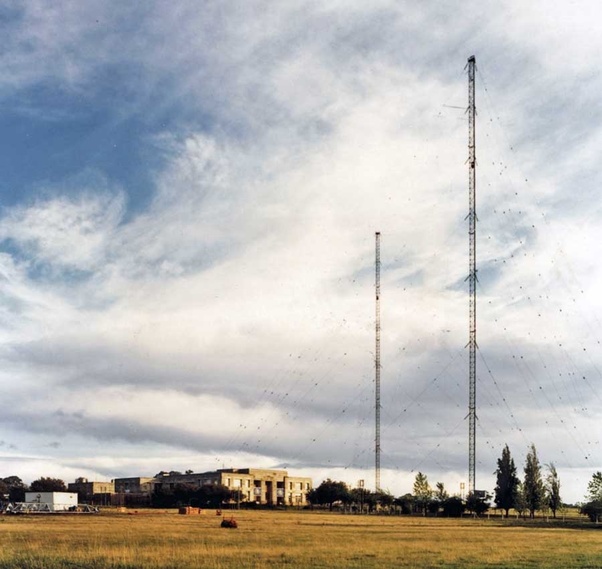
In all these situations, longwave radio is a vital backup. That’s why it’s been considered a vital piece of national infrastructure for nearly ninety years. Longwave literally uses long waves of light – stretching for kilometres in wavelength – which enables it to travel much further than any other type of radio wave, including the ones used by mobile ‘phone masts. It is also subject to less interference, allowing it to travel into buildings and over hills. In short, longwave is the only broadcast medium that can cover a whole country – including all the remotest areas – from a single transmitter mast. And it’s easy to receive – all you need is a simple, low-power radio.
Energy-saving
That brings us to our next point: energy saving. Did you realise that streaming content over the internet uses several times more electricity than simply tuning in to a broadcast television or radio programme? This is partly because of the device you use to watch or listen: computers and mobile ‘phones use vastly more energy than ‘normal’ radio sets, which can run for months on a single AA battery. It’s also because of the internet servers required to bring you content online. 1 million people streaming video and audio from these servers requires a vast amount of energy, much more than is consumed by a single television or radio transmitter beaming signals to 1 million television sets or radios.

Longwave, then, may be old, but it is also much more efficient than modern internet streaming. Longwave only requires one transmitter for the whole of England & Wales, and much of Ireland and northern Europe. This is, admittedly, a high-power transmitter, consuming 500 kilowatts of power – that’s 500,000 Joules of energy per second, equivalent to boiling around 200 kettles at once. But 200 kettles is not much energy, considering how many millions of people are able to listen to tune into this one signal. A network of FM or DAB masts providing the same coverage would require hundreds of lower-power transmitters, which together would consume much more than 500 kilowatts. Streaming Radio 4 to even 1 million people on the internet would require more energy than this.
Using longwave is therefore a way of saving energy, both in terms of the transmitter and in terms of the receivers that pick up the signal. If you switch from using your mobile ‘phone to listen to Radio 4 to using a simple analogue radio to listen on longwave (or to listen to Radio 5 on medium wave), you will be helping to reduce electricity demand and fight climate change.
Digital Detox
In this digital age, there is also much to be said for a technology that reliably brings us education, information and entertainment by non-digital means. Much as vinyl records have returned to mainstream use in recent years, so analogue radio can find a new place as an alternative to all the digital noise that assaults our senses in the modern world. There is no reproducing the warm sound of longwave broadcasts – especially on vintage equipment!
Please sign our petition to keep longwave broadcasting in the UK and prevent this national asset from disappearing forever.
 Keep Longwave