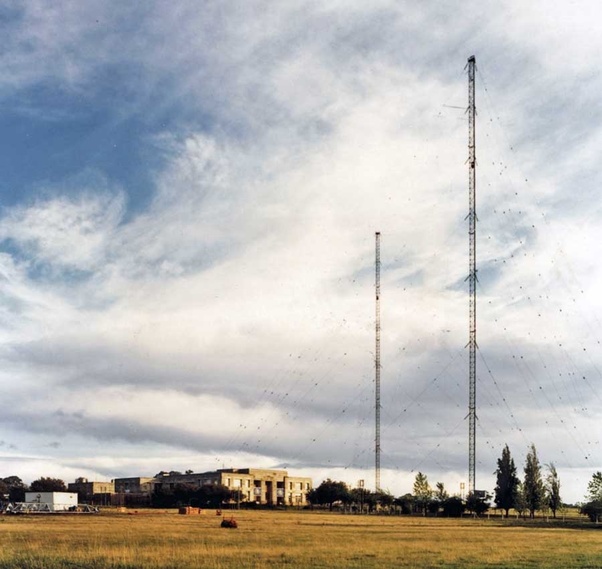
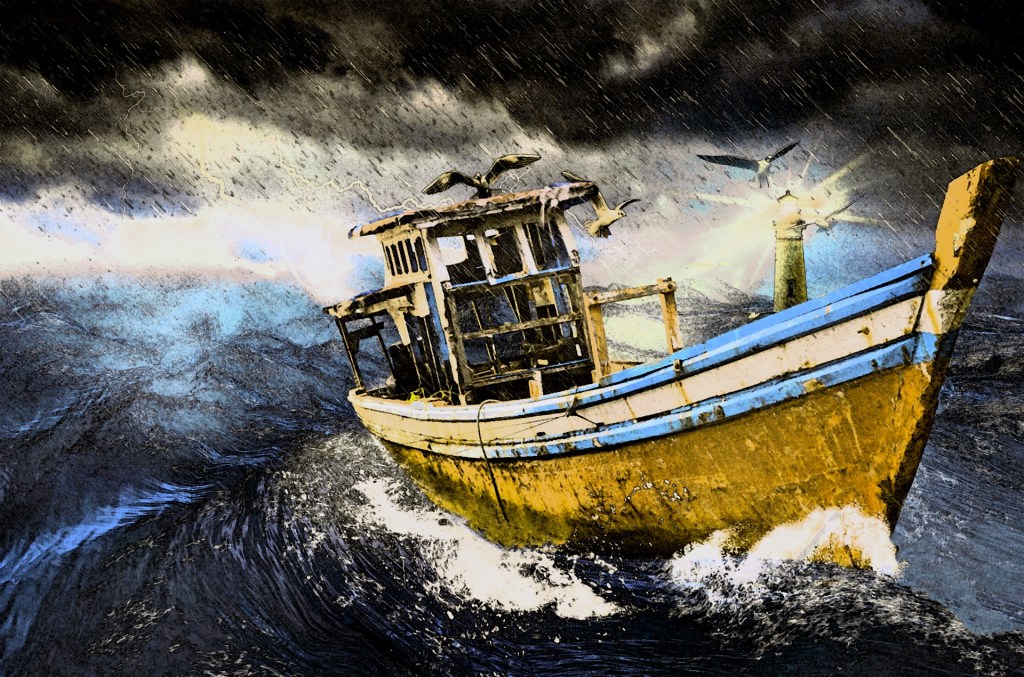
This year, the BBC celebrates 100 years of broadcasting the Shipping Forecast. Produced by the Met Office since the 1860s, the forecast in audio form was first conveyed from the BBC’s Daventry transmitter in October 1925. Since then, it has become a much-loved fixture of the radio schedules. If longwave transmissions cease, however, the future – and certainly the usefulness – of this iconic programme will be cast into doubt. Indeed, without longwave, the Shipping Forecast would never have come about at all.
Longwave has always been the transmission band of choice for the Shipping Forecast, because of the unique ability of long radio waves to travel very large distances without disruption. It is no coincidence that the forecast began at the same time as the BBC’s original longwave transmitter at Daventry, and it was transferred to the Droitwich transmitter following its construction in 1934, providing a more reliable and powerful signal. Whilst BBC stations using the longwave frequency have changed – National Programme, Light Programme, Radio 2, and from 1978 Radio 4 – the Shipping Forecast has remained a stalwart feature on longwave. It is the longest-running programme broadcast on the longwave band.
Nowadays, longwave is not the only option available to listeners. Inland fans of the Shipping Forecast can in many areas listen on FM, DAB or via the internet. But these alternative options are not open to listeners at sea, as FM and digital signals cannot travel for many miles offshore. Seafarers can receive textual weather information via the NAVTEX service provided for this purpose, but the only reliable way of hearing the Shipping Forecast we know and love is via longwave radio signals, which can travel for hundreds of miles and can in some instances be picked up on the other side of the Atlantic.
It is impossible to estimate the number of lives that have been saved by this longwave signal over the years. Claims that it is out-dated or ‘nearing the end of its life’ are misguided, as the technology still serves a useful purpose and many fishermen and other seafarers still use it when other sources of vital weather information fail. The transmitter need not stop working; it can be repaired and maintained indefinitely if the BBC chooses to do this. Indeed, it is a remarkably efficient way of providing national coverage of important information from just one transmitter. Furthermore, longwave is not daunted by storms, waves and local conditions at sea. Facing life-and-death situations, it is surely imperative that the longwave Shipping Forecast therefore remains an option open to sailors.
On the BBC’s current trajectory, however, it seems that the Shipping Forecast’s days are numbered. In 2024, the BBC cut the number of daily broadcasts of the programme from four to two, except on Saturdays, such that the Shipping Forecast can now only be heard in the middle of the night. These 00:48 and 05:20 broadcasts were always simulcast across all of Radio 4’s frequencies, because listenership is low at this time of day, so they were not considered to get in the way of other programmes. The daytime services at 12:04 and 17:54 were longwave-only, in recognition of the fact that actual seafarers reliant on these forecasts would usually have to listen on longwave, and that most other listeners wouldn’t be interested.
With those daytime broadcasts gone, and longwave itself threatened with closure, it is questionable what usefulness the Shipping Forecast will have going forward. It has already been made harder for those at sea to get an accurate synopsis during the day. If the two remaining broadcasts were no longer carried by longwave signals out into the oceans, their usefulness for seafarers would be very limited indeed – only audible if still on land or near to shore. The Shipping Forecast would then become a mere cultural relic, a means of getting to sleep perhaps, or a pleasant reminder of bygone days. And those at sea would have lost one of their essential means of understanding the shape of the weather, with potentially fatal consequences.
The Shipping Forecast needs longwave radio. So do our seafarers. Please support our campaign to Keep BBC Radio 4 Longwave.


 Keep Longwave
Leave a reply to Peter Bentley Cancel reply