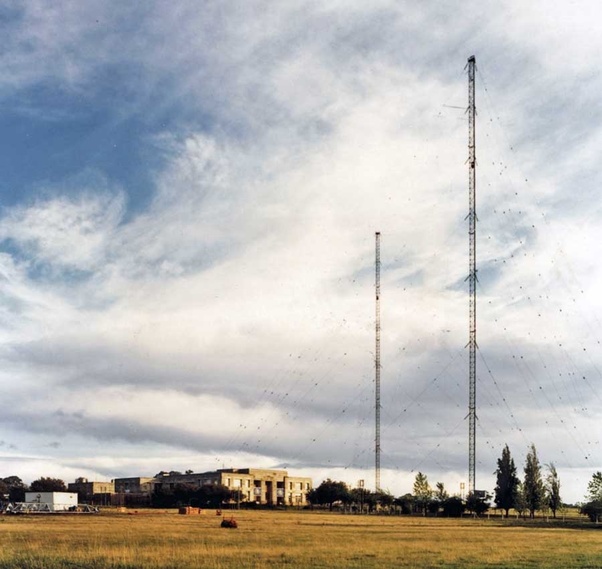
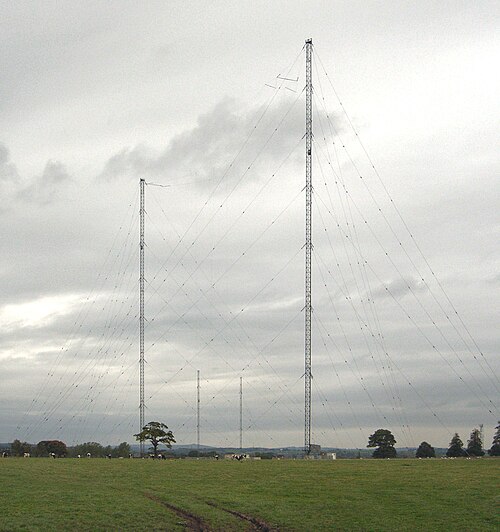
The BBC still intends to close down its Radio 4 Longwave broadcasts in September 2026, the BBC’s distribution department has revealed. This would mark an end to BBC broadcasts on the platform after more than a century’s service, and would come exactly 92 years after the main Droitwich transmitter was switched on. This is in spite of over 7000 people so far signing a petition to keep BBC Radio 4 Longwave, and 23 members of parliament supporting an Early Day Motion that questions the move.
Asked about the reasons for the shut-down, a BBC spokesman denied that financial pressures are the only motive for closing longwave. ‘Unfortunately, the decline in listeners and the reduced availability of longwave receivers mean that, for the majority of licence fee payers, closing the service is the fairest and most sustainable option,’ he said, citing figures that 75% of listening now takes place via digital means, including online.
However, this fails to account for 25% of listeners (amounting to several million people) still using analogue radios in the UK, listeners in areas of poor coverage, listeners abroad in northern Europe where BBC Sounds is no longer accessible, and the fact that longwave remains reliable when the internet and digital transmitters are down.
All of this has been pointed out to the BBC on several occasions since the closure was mooted in 2023. Yet the BBC spokesman confirmed that ‘a decision to close the platform has already been taken’ following an ‘impact assessment’, the scope and consequences of which have not been made public.
It took intervention from Liberal Democrat MP Tim Farron, a supporter of longwave, for the BBC to finally reveal last month its estimated costs for running and maintaining its network of three longwave transmitters. The corporation estimates that it would take £18 million to ‘re-engineer’ these transmitters, which currently rely on 1980s technology based on valves that may fail in the near-future. Meanwhile, it costs around £1.5 million per year in electricity to run the transmitters.
Several options for providing this funding have been suggested to the BBC, including the use of solar panels at the transmitter sites, which the spokesman admitted was ‘logical’. Another possibility would be for the BBC to apply for heritage or extraordinary governmental funding to cover the costs of maintaining a critical piece of national infrastructure available for anybody and everybody to use across the country and beyond. Such ideas were dismissed with the excuse that ‘financial considerations are only one part of a much wider picture’, which contradicts the BBC’s earlier claim that longwave needed to be shut down to save costs.
For context, £18 million to re-engineer the transmitters constitutes 0.03 per cent of the corporation’s £6 billion annual budget, which some would consider a bargain for such a long-range flagship transmitter system. The £1.5 million annual operational costs equate to the license fee paid by approximately 7000 people – coincidentally, the same as the number of people who have so far signed the petition to keep longwave. Most of the these are UK listeners, and given that some listeners to longwave will not have signed the petition and may not be aware of the impending closure, one could argue that Radio 4 Longwave’s listeners pay for the service themselves.
It was also suggested to the BBC that, given that all listeners abroad and the vast majority of the UK’s listeners to longwave live in areas covered by the Droitwich transmitter (all of England and Wales, Northern Ireland and parts of Scotland), costs could be reduced by only re-engineering and running that transmitter and allowing the two smaller repeater transmitters in Scotland to be retired. This would still retain most of longwave’s benefits, but compromise the signal quality in some parts of Scotland. This idea was rejected by the BBC.
Somewhat confusingly, having argued that the longwave transmissions are redundant in the digital age, the BBC spokesmen went on to say that the two Scottish transmitters ‘provide essential longwave coverage across the UK, particularly in Scotland.’ He added that ‘It would not be appropriate to reduce coverage in one of our nations if we were actively considering continuing the longwave service.’ Again, it is worth noting that many areas of Scotland can receive transmissions from Droitwich.
The Campaign to Keep Longwave continues to argue that the BBC’s decision to close the longwave platform is the wrong one, and is attempting to engage policymakers in the battle to save this essential service that could be relied on by millions in an emergency. Please sign and share our petition to keep longwave and consider contacting the BBC to air your thoughts on this vital issue. You can also write to your MP, asking them to hold the BBC to account on this important issue.


 Keep Longwave
Leave a reply to jovial41a5d83dc2 Cancel reply