Ofcom encourages AM listening even as BBC longwave hangs by a thread

Published by

on

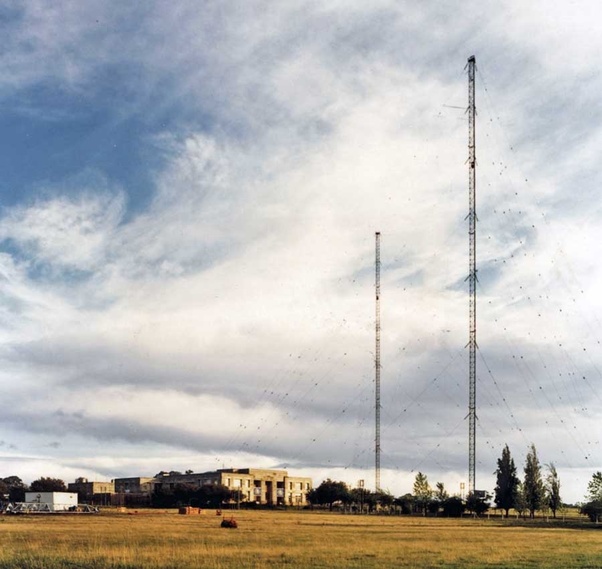
The UK’s media regulator has published an article on its website encouraging sports fans to use AM (which includes longwave) and FM radio. In a piece timed to coincide with the World Cup, Ofcom urges spectators to ‘keep up with play and avoid the delay’ by avoiding watching or listening to matches via internet streaming services which have a significant time delay. The message comes nearly three years since the BBC broadcast its final sports coverage on longwave, and possibly just days away from the axe falling on its flagship AM platform.

Time delay has long been identified as a problem with digital broadcast media. Whilst AM and FM radio is ‘near instantaneous’, according to the Ofcom article, audio streamed over the internet encounters a 20 to 50 second delay due to the time taken for signals to be digitised, packaged, uploaded to servers and downloaded to an internet-connected device. Streamed video fares even worse, with delays of up to 100 seconds. This means that a viewer watching a sports match via the internet might not know the outcome until nearly 2 minutes after a listener hearing the same match on AM or FM radio.

The phenomenon will not have gone unnoticed by fans attempting to listen to sports commentary whilst attending a match themselves. Where it would have been possible, for example, to tune into Test Match Special on Radio 4 Longwave and hear commentary at the same time as events were happening on the ground, attempting to do the same thing via digital radio incurs a lag of several seconds. Internet radio services such as BBC Sounds are even worse for this effect – as can easily be demonstrated by streaming Radio 4 at the same time as listening to it on your FM or LW radio.

This matters not only because of sports fans wanting to know the outcome of an event as soon as it happens, rather than minutes later. AM and FM radio have for decades provided a reliable time signal across the United Kingdom – you know that when the sixth ‘pip’ sounds on Radio 4, time time is exactly on the hour. That can be helpful for the general public needing to know exactly what time it is, but also for scientists and engineers whose experiments and hardware depend upon very accurate timing – the importance of which was highlighted recently by the creation of the National Positioning, Navigation and Timing Office. Radio 4 Longwave has long provided a nationwide reference time that facilitates these uses. That is why it is used to switch heating on and off via the Radio Tele-Switch (RTS) service still relied upon by over 100,000 households.

The withdrawal of analogue radio services removes access to this signal, meaning that news and information can no longer be transmitted instantaneously and a time reference is lost. The BBC and Ofcom have not explained what they expect to happen to the remaining RTS users if Radio 4 Longwave is taken off-air on Saturday 27th June, let alone considered how other applications using the time signal will have to adapt. Under the terms of Ofcom’s frequency allocation table, it is illegal for a time signal to be broadcast on 198 kHz longwave without an audible broadcast signal being transmitted at the same time.

The Campaign to Keep Longwave continues to oppose the withdrawal of BBC longwave broadcasts, and, if they do cease as threatened on 27th June, will support the reinstatement of broadcasts on this frequency. We also support the continued use of other AM broadcasts, notably medium-wave, which become all the more vital for instantaneous and wide-ranging communication in the absence of longwave. The Department for Culture, Media and Sport has recently launched a review of the future of British radio. In light of the unique features of AM radio, not least among them its zero time delay, it must surely continue to have a place within the broadcast spectrum for decades to come.

22 responses to “Ofcom encourages AM listening even as BBC longwave hangs by a thread”

  1. h katers Avatar
    h katers

    media and long wave transmitted programmes are a beacon in the mediasoup

    Liked by 1 person

  2. Louis Avatar
    Louis

    East europe also need the info from the bbc world service. 1296 khz is ferry missing in the evening en nicht.

    En also the good old 648 khz during the day in west Europe..

    Liked by 1 person

  3. David Elliott Avatar
    David Elliott

    If the jobworths who make such decisions had ever lived overseas in a remote area they may possibly reconsider, although I doubt it, they are too stupid. I am thinking stronger language!

    Liked by 1 person

  4. jovial41a5d83dc2 Avatar
    jovial41a5d83dc2

    I’m actually feeling quite emotional that BBC Radio 4 will soon be no longer broadcasted on Long Wave; hopefully the frequency can be reused for another station; like how Radio Caroline used 648 from Orford Ness

    Squirming 🦑

    Twitter: http://twitter.com/Squidygame

    Website: http://151.244.232.25/

    Liked by 1 person

  5. Thomas Greenwood. Avatar
    Thomas Greenwood.

    I am dreading losing radio 4 on the longwave. The warmth of the sound and the fact that my radio has been in constant use using longwave for more than 50 years mean it will be a real loss for me. The BBC are really annoying.

    Liked by 1 person

  6. Jensen Avatar
    Jensen

    l will certainly miss BBC long wave when it stops at the end of this month.

    Having as arrived in Scandinavian in the early 1970s as a teenage, it was a joy to be able to listen to Allan Freeman on a Sunday evening announcing the pop top 10.

    Later as l grew older and more mature the channel changed to radio 4 long wave with the many interesting talk programmes. Where would my farming knowledge be without the Archers.

    Certainly this is going to be a sad loss to the listening audience

    Linda Jensen

    Like

  7. Steve Green Avatar

    I used to listen to radio 4 longwave on my transistor radio.

    It was permanently tuned to that channel because I discovered that the batteries lasted a whole week when tuned to longways but only 4 days when using the AM frequency.

    So purely on an energy saving level longwave is more environmentally friendly but the world service programme and the shipping forecast are a vital lifeline for millions of people around the world.

    Shame on the faceless management minions at the BBC who can have absolutely no concept of the cultural vandalism their destructive penny pinching decision-making policies create.

    Like

  8. joyfullyjovialc4291e2328 Avatar
    joyfullyjovialc4291e2328

    I listened in a remote area of France to BBC RADIO 4 LW for years and years. To stop with these transmissions looks to me a bit like Brexit revisited.

    Liked by 1 person

  9. Ian Hosker Avatar
    Ian Hosker

    I keep saying that radio 4 could be broadcast on 162 khz Long wave as that French transmitter is still active.

    Liked by 1 person

  10. andyrutterceff104e84 Avatar
    andyrutterceff104e84

    I had written to my local MP in Bromsgrove in which constituency the Droitwich Transmitters are situated. Although sympathetic to listeners losing the service he made the point, The BBC is responsible and not the Gov’ nor Parliament.

    I have added comments to some social media posts on BlueSky and added a comment to an opinion pièce in the Guardian, that was ‘picked ‘ to highlight the opinion.

    A edited combined selection of what I added to various sites.

    And don’t forget on June 26th @ midnight GMT, over 100 yrs since BBC Radio first started on Long Wave for the whole UK and beyond closes down. Three Radio 4 Transmitters (not operated by the BBC now) at Droitwich, Burghead & Westerglen in Scotland finish after their 90 yrs of providing basic Radio from the days of crystal sets.

    Mariners, Cricketers & folk far beyond these shores received Long Wave with accurate time signals. So now to ask their ‘smart speaker’ – but not if the Internet is hacked or no electricity? From crystal set evenings listening for the calm tones of a BBC announcer saying “Here is the news.”
    An era ends.

    Liked by 1 person

  11. David M Isbister Avatar
    David M Isbister

    I fondly remember building a crystal set when I was twelve (sixtyish years ago) and listening to the BBC Light Programme / Radio 2 on what was then 200kHz. No batteries, a simple tuned circuit, diode detector, high impedance headphones and a long, long aerial! More recently I have built a few long wave receivers employing two integrated circuits, total cost £15. Radio 4 comes in loud and clear filling the whole room. Compare that with cost and performance of a DAB radio. Who could actually design and build a DAB radio? Not many takers there… And, please don’t get me started on SMART Speakers, reliant as they are on a broadband signal. Think war, think no internet, conclusion, no Radio 4 on your useless SMART Speaker….

    Hopefully, the powers that be will not decommission the three 198kHz transmitter. Because sometime soon, something tells me that they will be pumping out Radio 4.

    Like

  12. Rob Sharman Avatar
    Rob Sharman

    There has been a “campaign” against AM, encouraging the drift to higher quality audio. Set manufacturers being pleased to keep up & supply the latest swish models.
    Ford cars have gone back to re-introducing AM. I’d say that driver concentration is safer the longer you can go without having to “fiddle”. Personally I prefer the content from Radio Caroline & the distance 648 goes is good. I wish it was stronger to overcome some of the topography nulls. There are also the maritime users to consider – perhaps not a vast audience, but why should they be denied radio beyond the horizon limits of FM & certainly DAB.
    BBC cutbacks being necessary in radio Tx when they overpay celebrity staff is unjust.
    There has to be a simple & effective national means for the public to be able to rely on – the audio clarity is not paramount. After all, with road noise or boat engine noise with wind & wave too, the information frequencies for the human ear are what matters. Who can take over the running of this service, without the costly entertainment bill.
    Credit to Radio Caroline on putting in solar panels to keep the Tx power bill down, & having volunteers keeping the wages bill low whilst providing excellent programs too.

    Like

  13. Vivienne kincaid Avatar
    Vivienne kincaid

    My internet is not viable in my garden or many places i visit locally so I cannot use my phone. So many issues with my smart speaker cutting out, looping, etc., it is too frustrating to use and no electricity to do so in my garden or when out and about. Why will the BBC offer for people in Europe and other parts of the world the opportunity to view their programmes/I player and radio and charge a licence fee???? this would give them the money to run and ? improve their broadcasting worldwide. As things are going they will soon be ‘narrowcasting’

    Liked by 1 person

    1. andyrutterceff104e84 Avatar
      andyrutterceff104e84

      ’Narrowcasting.’ From Vivienne’s pièce; what an excellent description of how broadcasting, and in particular how our National Broadcaster seems to want listeners & tv watchers to have that narrowing choice of reception. It doesn’t work or becomes too convoluted to bother trying to listen in scores of places from Rural to Remote.

      Like

  14. Mike Avatar
    Mike

    Its becoming more apparent that an analogue radio signal is a needed if for nothing else it provides an easily found means of communication during an emergency or crisis, it works where other means of transmission are still unreliable.

    I still like the fact that a radio working on batteries will for last for months of listening on analogue not a couple of days with digital.

    Liked by 1 person

  15. Normin Avatar
    Normin

    “Narrowcasting” describes it perfectly. I live in a remote rural area and have relied on LW for decades. It will be a great-lose to me and many others in my position.

    Liked by 1 person

  16. Richard Hall Avatar
    Richard Hall

    I have written to the BBC director general. Had reply this morning form the complaints dept.. Intend to reply!

    Richard H.

    Liked by 1 person

  17. Richard Hall Avatar
    Richard Hall

    My teleswitch had been turned off but I still have not allowed them to change my meter – just in case!

    Like

  18. andyrutterceff104e84 Avatar
    andyrutterceff104e84

    To ‘keep up with play and avoid the delay’ says OFCOM with their rhyming ditty because of the World Cup across the Atlantic!

    Rather weird that now so late in the day when the plug us about to be pulled on LW during the Football, and presumably MW following soon, to do the opposite that the BBC is saying, “we’re are closing down soon, do listen on something else including a Smart Speaker,” and OFCOM go into specific detail of delays on internet based listening ?!

    Like

  19. Amradiofan Avatar
    Amradiofan

    Long Wave works SO well, it’s the most reliable for portable listening – always easy to tune into and *never* drops out in the car or on my tiny pocket radio (unlike FM and DAB!). This is truly a backward step (much like the ditching of copper landlines, incandescent lightbulbs and petrol cars). Far from abandoning LW, the BBC should be simulcasting *all* of its radio stations on there!

    No doubt Radio 5 Live on 693/909khz Medium Wave will be next to close, next year.

    I’m sure many ex-pats will be feeling very sad! R4 LW can be received all over Europe and R5 on MW can be received widely across Europe at night, when sun interference is reduced. I can also pick up many European stations on MW at night (especially Spanish).

    Critics of AM sound quality say that, as well as not being in stereo, it sounds ‘muffled’. Personally, I love the smooth, rich, mellow sound of AM broadcasting, especially LW. I find it so relaxing to listen to and it makes even the ugliest voices sound quite decent! It also wonderfully disguises the shitty sound quality of interviews conducted over Skype and other ‘voice over internet’ applications, which unfortunately have become the norm since Covid – particularly on news and current affairs programmes (and R4’s consumer programme, ‘You and Yours’). I will miss it so much.

    And yet, perhaps we should be less concerned about the closure of LW/MW and more worried for the future of radio and TV broadcasting – full stop. The direction of travel is clear – broadcasters no longer want to broadcast, they want everything online as download only. Freeview, the most widely available platform, will likely no longer exist within ten years. No more linear radio and TV. You can see why: no more expensive transmission equipment to maintain, no need to go to the trouble of crafting a balanced schedule, no more complaints about repeats, less need to create new content (particularly drama, which is expensive to make). Everything will be ‘box sets’! All TV soaps, a cornerstone of the schedules which don’t fit the download model, will be axed. The end of broadcasting poses as much of a threat to the livelihoods of those working in the entertainment industry as A.I. does. Actors, writers, musicians and crew will be struggling for work far more than they are now (why aren’t Equity and the musicians’ and writers’ unions fighting this?). Listeners and viewers without an expensive fibre broadband connection or decent mobile phone signal/battery will be shut out.

    Why is no-one asking the question: what will happen to the LW transmitters and equipment? One would sincerely hope that Droitwich, at least, will NOT be dismantled, but mothballed for future emergency use. We may well need it in future time of war or national crises – far more reliable than mobile phone alerts! We, the public, and the Government should put pressure on Arqiva to maintain Droitwich as a minimum. Please email enquiries@arqiva.com about this, as well as your MP.

    Like

  20. inspiring26db9e4d72 Avatar
    inspiring26db9e4d72

    long wave reachs so far , it’s not digital which can be jammed easily, whereas long wave is not so easy to stop.it therefore is not only important to the UK listener but to lots of people in the world & at sea

    Like

  21. Robert Avatar
    Robert

    I live in a rural área innorthen Spain, 6 miles away from the beach. Even though the equipment is operating in reduced power, I can still listen to LW. Best quality sound near midnight.

    Really sad to see a vital, strategic information Channel being axed in favour of the “digimerde” (Word from Tarantino, not mine).

    If sadly LW goes silent on the 27th only Polskie Radio, transmitting in 225, Will remain.

    best regards

    Like

Leave a comment