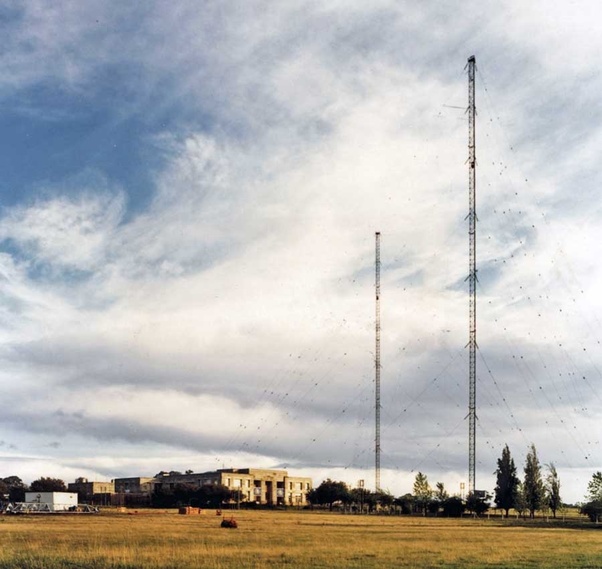
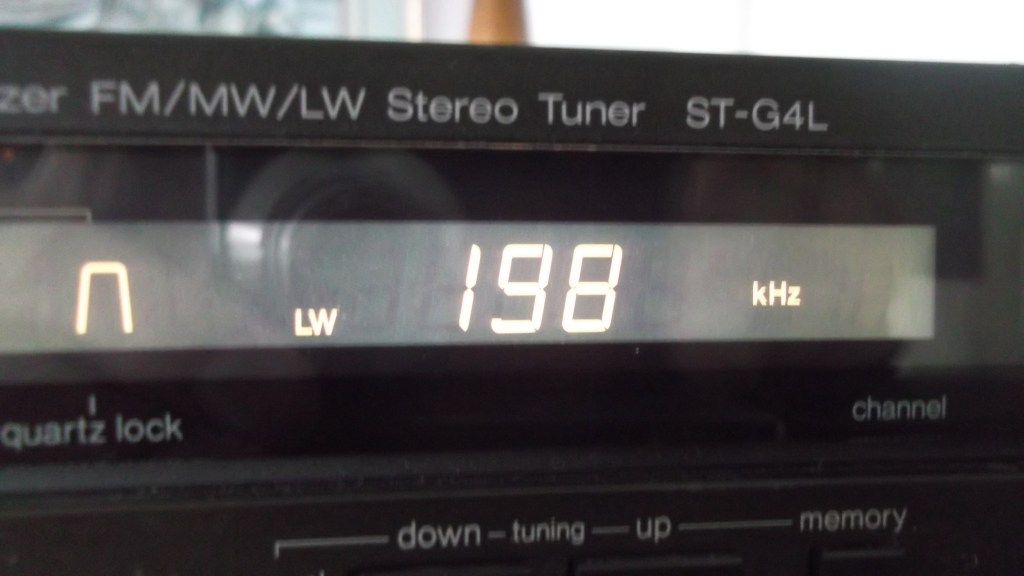
The BBC still expects to close Radio 4 Longwave overnight tonight, the latest updates suggest. This marks a cessation of Radio 4 broadcasts on the frequency that have been in operation since 1978, and comes ahead of a shutdown of all BBC transmissions on longwave after over 101 years.
The BBC announced plans to retire the longwave service broadcast from Droitwich, Burghead and Westerglen transmitters in 2022, and stopped scheduling separate longwave programming from 1st April 2024. In May, announcements began on longwave at 59 minutes past the hour, to say that the longwave service would be ‘closing’ on 27th June. The latest press release on the subject from the BBC suggests that Radio 4 will indeed leave longwave on 27th June, with BBC broadcasts ceasing altogether on the waveband from 30th June. It is assumed that a message will be broadcast in the interim between these two dates, announcing that BBC longwave has closed.
It is expected that Radio 4 will leave longwave at 0100 BST on Saturday, when the station shuts down for the night. Ordinarily, there would then follow four hours of a BBC World Service simulcast; it is currently unclear whether this will go out on longwave or not. When Radio 4 resumes at 0500 BST on Saturday 27th June 2026, it will no longer be broadcasting on longwave.
The Campaign to Keep Longwave has been fighting for several years now to oppose this move, which we believe will be deleterious on several fronts. Longwave radio provides a reliable nationwide signal that other forms of broadcast cannot match, and is reliable to internet and power outages. It is also very energy-efficient compared to digital devices.
Longwave is also uniquely able to bring important news to Europe, including Russia and Ukraine, without censorship. Indeed, the MP for New Forest East Sir Julian Lewis asked a question in Parliament on Wednesday of the minister for Culture, Media and Sport about how audiences in Russia and Ukraine would be served when the World Service is taken off longwave. Unfortunately, the government failed to engage productively with this question, instead replying that ‘The BBC is editorially and operationally independent, and must decide for itself the most effective and efficient way of delivering the BBC World Service’. This is in spite of recent funding increases for the World Service, and goes against the government’s commitment to the radio channel as a source of reliable information worldwide.
So far, the BBC has been deaf to all voices – including MPs and other prominent figures – calling for longwave radio to be preserved. The near-8000 strong petition launched on this website was sent to the Director General on Monday, but no response has so far been received. Meanwhile, the director of the campaign group Silver Voices has called on the BBC to reconsider the move, which would have a profound effect on older listeners and those dependent upon RTS electricity meters, which use the longwave signal. Again, we are awaiting comment from the BBC.
According to Ofcom regulations, it would be illegal for the RTS signal to be broadcast without audible programmes on the same frequency, but hundreds of thousands of households may still be dependent upon this for their heating control. When asked about the RTS issue, Ofcom – similarly to the government – denied any influence in the decision to switch off transmissions. They told us, ‘Ofcom does not have a role, nor the ability, to require the BBC to continue providing the Radio 4 service specifically via long wave. Therefore the decision on whether to replace the transmitter or to cease providing the service is for the BBC to make.’
Coverage of the impending shutdown of longwave transmissions has been muted on the BBC, and it is unclear whether overseas listeners tuning in to the World Service between 0100 and 0500 BST via longwave have been made aware of the withdrawal of this important signal. However, the Media Show on Wednesday 24th June did include a five minute segment about longwave at the end of the programme, available at https://www.bbc.co.uk/programmes/m002xzj8
Further press coverage is expected this weekend, as the media wakes up to the significance of the shutdown of a signal that has existed for the entire lives of nearly everyone alive today.
On Saturday 27th June at 12.00 BST a special ceremony will be held at the Droitwich Heritage Centre, home of the Droitwich Calling exhibition on the history of longwave. The main longwave transmitter known as ‘Droitwich’ is actually located at Wychbold, around 3 miles from Droitwich town centre. Dignitaries including the mayor are expected to attend, celebrating the iconic history of a transmitter that – like its Scottish counterparts – has been on the air since the mid-1930s. The celebration will echo, albeit with a more poignant tone, events surrounding Droitwich’s 50th anniversary celebrated in 1984, when the BBC placed more value on its flagship service.
We recommend that longwave listeners make the most of this afternoon and evening’s opportunity to listen to Radio 4 loud and clear in warm AM tones. If you want to stay up (or get up) to listen to Radio 4’s shutdown on longwave, it’s expected at 0100 BST tonight.
Meanwhile, the campaign continues to keep – or reinstate – Longwave broadcasts.
Update: Reply to petition from the BBC
The BBC has replied to our latest petition hand-in, in an email dated 26th June 2026 at 15:17 BST. The message, from Head of Transmission Sara Shepherd, reads:
We appreciate you taking the time to write again and recognise why this moment matters so much to you and others who have supported your petition. Long Wave has played a remarkable role in the story of the BBC and in the wider history of radio in the UK. We recognise the strength of feeling among those who have listened over the decades.
As set out in our previous correspondence of June 10th, we have considered issues surrounding closure carefully, including the points you raise on coverage, resilience and investment. Having reviewed these factors in detail, the BBC’s position is unchanged as continuing Long Wave would require significant investment on the BBC’s part to replace ageing equipment to sustain a platform now used by a very small proportion of listeners.
We note your concerns about Long Wave’s role during emergencies. As outlined previously, Long Wave is not designated as Critical National Infrastructure and is not relied upon by the BBC.
The BBC recognises that this change will disappoint some listeners and we are continuing to provide information and support to help those affected transition to alternative ways of listening. Radio 4 as a service remains widely available in the UK on FM, DAB, BBC Sounds, smart speakers and television platforms, including Freeview, satellite and connected TVs. FM remains available to 99.5% of UK households.
Finally, it may be of interest to you to know that the end of Radio 4 transmission on Long Wave will be marked with an item on today’s Radio 4 “PM” programme, at 5pm.


Leave a Reply