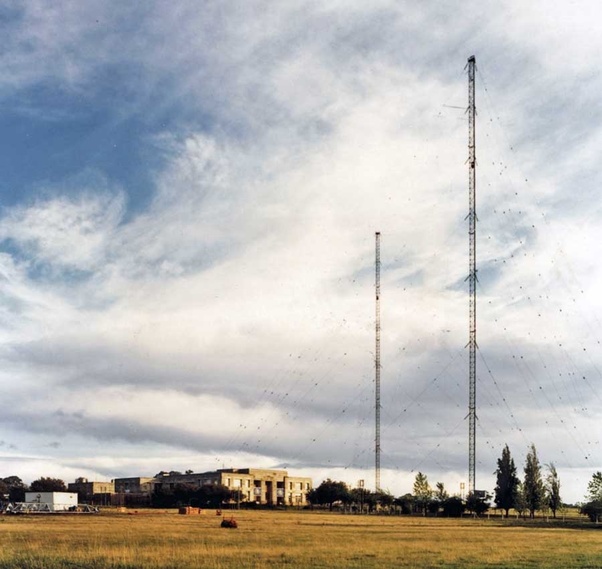

The power cut that crippled infrastructure in Portugal and Spain earlier this week has led many to question our increased reliance on digital and internet technologies. With cyber attacks also in the news, now more than ever it is important to retain the UK’s critical longwave technology that is available to anyone, anywhere, during a time of crisis.
The power cut in the Iberian peninsula proved just how vulnerable mobile ‘phone and internet connections are when natural disasters or deliberate interference bring down power supplies. Mobile ‘phones require masts that are relatively close by, the majority of which rely upon the national grid to provide power, and internet routers always require a steady supply of electricity. Increasingly, even landline telephones rely upon the internet due to BT’s ill-advised roll-out of ‘digital voice’, which will leave users completely unable to contact the outside world during a power cut – in some cases for the first time since copper telephone wires were installed in the nineteenth century.
When internet communications and power supplies fail, it seems that one of the most important priorities for many people is to find out what is going on. This explains the huge spike in sales of analogue radios in Spain and Portugal on Monday. Radio networks were still operating – especially on AM, where only a relatively few transmitters are needed to broadcast over large distances, transmitters that are usually fitted with back-up power supplies. In a power cut, these signals become the only source of news – and reassurance of whether and when supplies are likely to be reconnected. In a lengthy power outage, these broadcasts are therefore vital to prevent widespread panic, and bulk-buying.
In the UK, AM transmissions include both medium-wave and longwave services – both of which are threatened with closure by the BBC despite its role as the national broadcaster. The BBC proposes to shut down longwave transmissions – available nationwide at the press of a switch on any cheap, simple longwave radio – as early as the end of June 2025, and to close down mediumwave in 2027.
If the evidence of Spain and Portugal’s experience this week is anything to go by, any such closures would be severely misguided. FM transmitters, like mobile ‘phone masts, have to be many in number to cover the whole country – meaning that they require a lot more energy in total in the first place, and are more likely to be knocked out by local or national power cuts. Longwave and medium-wave broadcasts are therefore a vital asset to keep the public informed during times of war, natural disaster or unexpected internet outage.
It seems that many people in the UK agree, as the Scotsman reports sales of emergency radios fitted with the capability to receive AM transmissions have already increased since the incident in Spain and Portugal, the cause of which has not yet been identified. These radios are hand-cranked or rely on long-lasting battery power or solar panels, so that they can function with no electricity for many days or weeks. Yet they would be rendered useless if AM (medium-wave and longwave) transmissions were switched off and power cuts shut down local FM transmitters.
Indeed, the Metro has dubbed radio the ‘ultimate survival tool in blackouts and emergencies‘, pointing out that mobile ‘phones won’t do much good in times of crisis. Not only power cuts, but also the wars in Ukraine and Gaza have proven just how valuable a tool analogue radio is.
Please sign our petition to Keep Longwave in the UK, and tell the BBC your views about the need to keep longwave, and help to ensure that we are not left helpless if a major crisis strikes here.


 Keep Longwave
Leave a reply to Joe Barry Cancel reply