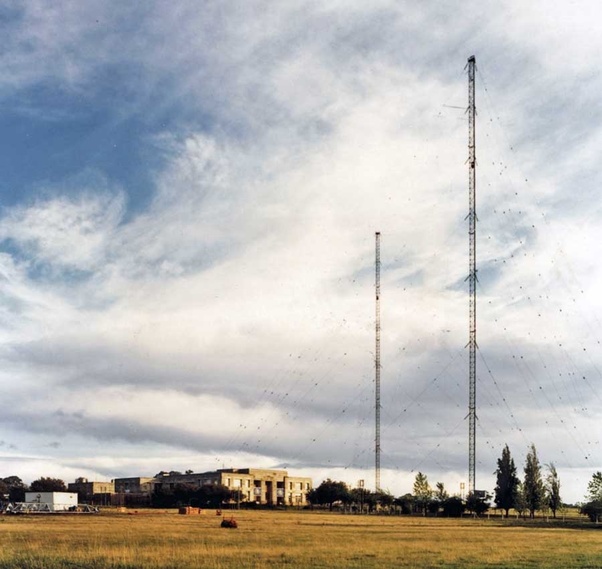
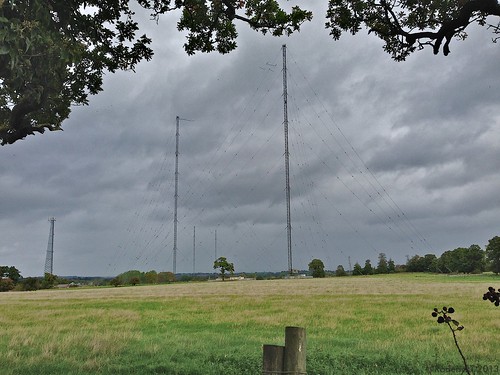
The BBC now expects to close its flagship national radio service, Radio 4 on Longwave, at some point during 2026, a BBC contact has told the Campaign to Keep Longwave. The news comes in the month that marks 91 years of broadcasting on longwave from the main Droitwich transmitter, and during the centenary year of one of the most iconic longwave programmes, the Shipping Forecast. Meanwhile, the campaign to stop this shutdown altogether continues.
Any longwave shut-down during 2026 would leave the Shipping Forecast inaudible to many mariners, as FM and coastguard signals cannot travel further than a few miles off-shore. It would also deprive thousands of longwave listeners across the country from a much-loved source of news, entertainment and education in the form of Radio 4, which is not available in all areas on FM or DAB.
Contrary to rumours circulated on some parts of the internet, however, an exact shutdown date for longwave has not yet been decided, as the BBC continues to carry out an impact assessment on the closure of the service. The BBC has stated its intention to inform listeners of the actual date ‘at least two months’ before the signal is switched off. This could happen as early as January 2026, or not until December.
The Campaign to Keep Longwave continues to push for this date to be put back further, and indeed indefinitely postponed. In our report Still Speaking to the Nations, published earlier this year, we set out several important reasons for keeping the longwave broadcasts, including but not limited to:
- The low energy costs of broadcasting from a single transmitter to the whole nation
- The importance of a single nationwide reliable signal in the event of war or cyber attack that could render the internet inaccessible
- The need for longwave broadcasts of the Shipping Forecast at sea
- Provision of Radio 4 in parts of the country that are poorly served by FM, DAB and the internet
- The heritage value of continuing a service that has run for nearly a century, let alone the countless vintage receivers capable of tuning in
- No hard evidence that longwave listenership is declining, and the need to attract new listeners to radio for the BBC’s own survival
Added to this, we can now include the importance of Radio 4 Longwave to some listeners in war-torn Ukraine, who can find therein a trustworthy source of news that cannot be blocked by hostile powers.
The BBC has yet to provide a detailed response to the report, or to the petition to keep longwave containing over 5000 signatures, which was delivered in person to Broadcasting House on 7th June 2025. Since then, the petition has attracted more than 1000 further signatures, and continues to grow.
In a time of uncertainty, division and political turmoil, the importance of Radio 4 Longwave has never been greater. Please help support the Campaign to Keep Longwave by signing and sharing our petition.


 Keep Longwave
Leave a reply to Rhys Thomas Cancel reply