BBC now expects to close Radio 4 LW during 2026

Published by

on

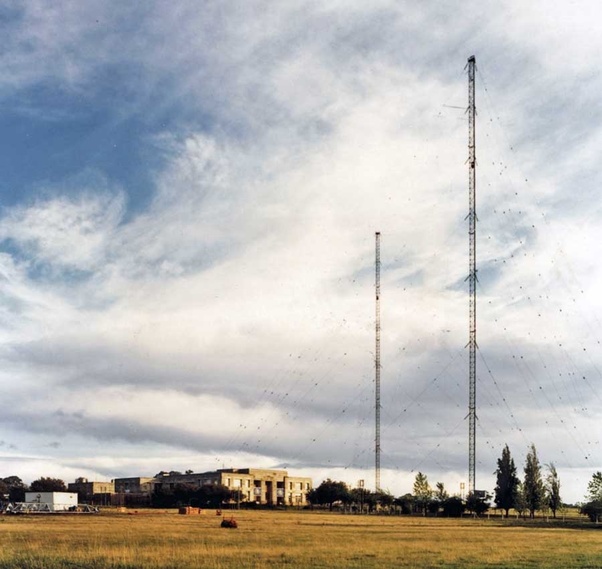
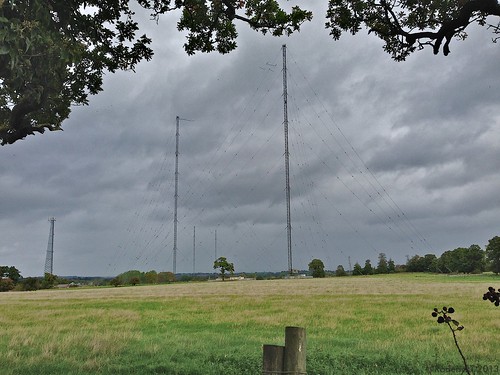
The BBC now expects to close its flagship national radio service, Radio 4 on Longwave, at some point during 2026, a BBC contact has told the Campaign to Keep Longwave. The news comes in the month that marks 91 years of broadcasting on longwave from the main Droitwich transmitter, and during the centenary year of one of the most iconic longwave programmes, the Shipping Forecast. Meanwhile, the campaign to stop this shutdown altogether continues.

Any longwave shut-down during 2026 would leave the Shipping Forecast inaudible to many mariners, as FM and coastguard signals cannot travel further than a few miles off-shore. It would also deprive thousands of longwave listeners across the country from a much-loved source of news, entertainment and education in the form of Radio 4, which is not available in all areas on FM or DAB.

Contrary to rumours circulated on some parts of the internet, however, an exact shutdown date for longwave has not yet been decided, as the BBC continues to carry out an impact assessment on the closure of the service. The BBC has stated its intention to inform listeners of the actual date ‘at least two months’ before the signal is switched off. This could happen as early as January 2026, or not until December.

The Campaign to Keep Longwave continues to push for this date to be put back further, and indeed indefinitely postponed. In our report Still Speaking to the Nations, published earlier this year, we set out several important reasons for keeping the longwave broadcasts, including but not limited to:

  • The low energy costs of broadcasting from a single transmitter to the whole nation
  • The importance of a single nationwide reliable signal in the event of war or cyber attack that could render the internet inaccessible
  • The need for longwave broadcasts of the Shipping Forecast at sea
  • Provision of Radio 4 in parts of the country that are poorly served by FM, DAB and the internet
  • The heritage value of continuing a service that has run for nearly a century, let alone the countless vintage receivers capable of tuning in
  • No hard evidence that longwave listenership is declining, and the need to attract new listeners to radio for the BBC’s own survival

Added to this, we can now include the importance of Radio 4 Longwave to some listeners in war-torn Ukraine, who can find therein a trustworthy source of news that cannot be blocked by hostile powers.

The BBC has yet to provide a detailed response to the report, or to the petition to keep longwave containing over 5000 signatures, which was delivered in person to Broadcasting House on 7th June 2025. Since then, the petition has attracted more than 1000 further signatures, and continues to grow.

In a time of uncertainty, division and political turmoil, the importance of Radio 4 Longwave has never been greater. Please help support the Campaign to Keep Longwave by signing and sharing our petition.

22 responses to “BBC now expects to close Radio 4 LW during 2026”

  1. Bandwagon Avatar
    Bandwagon

    In the past I have always been disapointed with long wave reception, that is until I visited a freind who collects old receivers. He had one radio receiver that played R4 crisp and clear and if he’d said it was FM I would have believed him. In fact I liked it better than FM, as sometimes FM sounds to me a bit ‘lispy’ So it was just my receivers, and I have heard them say the quality that goes out is the same on all channels. When I fix my recorders, I might make a token recording for posterity!

    Like

    1. Faleh Altamemi Avatar
      Faleh Altamemi

      This is too bad – keep this LW .

      Faleh R. AlTamemi

      Like

  2. Rhys Thomas Avatar
    Rhys Thomas

    As much as I value Radio 4 on Long Wave, I perceive that the attempt to keep this service going is a losing battle.

    A petition with 6000 signatures will not have had much impact on BBC management, indeed it probably reaffirmed their committment to switch off the service. LW doesn’t even get mentioned when their Radio 4 announcement states that it’s available on FM, DAB and smart speaker. Young people I meet don’t listen to any radio – just streaming services. My own teenagers do listen to R4 FM in their bedrooms, but they seem to be the exception. I listen to R4 LW in the car, since local FM reception is poor in rural north Wales. There’s far too much man made interference, notably from switched mode power supplies, on LW for me to to listen to R4 LW at home.

    I understand that a century ago, the authorities had no interest in HF let alone VHF since the spectrum was perceived as useless for propagation. How things have changed, now the need is for ever more bandwidth, which means going higher up in frequency. Meanwhile the original LW and MW bands have been pretty much vacated. Apart from R4, it’s just R5 Live and Talk Sport.

    Like

    1. Pázmány Attila Avatar
      Pázmány Attila

      Yes, sir, part of the truth. What is missing is the question of a blackout, when there is no electricity, TV, internet, Wifi, cell phone service at all. How can authorities inform people? How can the population hear the lifesaving news? When power is limited, LW in the cheapest, FM/DAB is the most expensive way to transmit. Even the army of great powers like USA, Russia etc. keep LW stations (VLF) in reserve in case of a nuclear war. Why did the competent British minister asked UK to stock up food, water, medicine, candle, etc and battery operated radios – because in the future there will be such crisis?

      Like

  3. swimming6f8e7f835e Avatar
    swimming6f8e7f835e

    From David Hine.

    Indeed it is a valiant effort by Tobias to pull together his petition to retain Droitwich LW, but I aggree with the realistic opinion of Rhys in his post. The only thing that could save Droitwich is for it to be continued as a commercial venture. The BIGGEST problem for that is now the fact that there are almost no listeners on LW, meaning that no one will want to invest cash into it. Talk sport and R5 are due to shut down on MW soon, leaving those bands abandoned too. The other option is for free radio operators to use the abandoned L and MW bands for “hobby broadcasting”, as “people’s bands”. That will happen in a small way, so DX’ing pirates will provide interest in the abandoned L and MW’s

    Like

    1. Trevor Hancock Avatar
      Trevor Hancock

      David, it cannot be true that there are “almost no listeners on LW”. Can I please refer you to the following sentence from the main article above: “Any longwave shut-down during 2026 would leave the Shipping Forecast inaudible to many mariners, as FM and coastguard signals cannot travel further than a few miles off-shore.” The mariners who rely on this broadcast most certainly count as “listeners”! And in their case, listening to the Shipping Forecast is not simply a matter of listening for pleasure, it can be a matter of life or death. Hence why Radio 2 Longwave must not be switched off.

      Like

  4. Rhys Thomas Avatar
    Rhys Thomas

    How about “hobby broadcasting” of Radio4 on its existing 198kHz slot, but as a SSB transmission?

    Like

    1. swimming6f8e7f835e Avatar
      swimming6f8e7f835e

      My name is David Hine.

      It’s not the old and wonderful independent, moral impartial BBC of Lord Reith any more.

      That’s why free radio, also known as “Hobby broadcasting” is now the way to go, using the redundant L and MW’s as “people’s bands” for anyone wishing to do so.

      Ofcom are now irrelevant, and the sad state of UK public broadcasting now reflects that.

      Anyone interested in discussing “hobby broadcasting” can email me, and if enough interest i sshown we can get something suitable online to focus on “people’s broadcasting” and how to organise that.

      My name is David Hine, and my email is:- dhine2999@yahoo.com

      Like

    2. chrishunter Avatar

      Not a good idea. The carrier of the 198kHz transitter is a superb frequency reference!

      Like

  5. RM Avatar
    RM

    the date circulating online was given to Arqiva engineers at Droitwich

    Like

    1. t_thornes Avatar

      Thanks RM,

      I had heard that. I’m assuming the September 2026 date relates to when the BBC’s current contract with Arqiva is to end. I suppose that’s not necessarily the same date as that when transmissions will cease, which could be earlier or if the contract is extended could be later.

      Like

  6. Uwe Riemschneider Avatar
    Uwe Riemschneider

    In the event of a regional power outage, reception via longwave is possible without any problems, as there are no local sources of interference. The Polish longwave transmitter at 225 kHz for example can be easily received even in rural areas of the Netherlands, 500 km away. In the event of a disaster, only a battery-powered radio is needed. This means that, without local interference, a 100 kW longwave transmitter can easily supply an entire country with emergency information. During the cold war, it was mandatory for every AM transmitter to have a power generator with a week’s supply of diesel. :o))

    …for just in case…

    Greetings…Uwe

    Like

  7. mortallycupcake7b307c2f71 Avatar
    mortallycupcake7b307c2f71

    The Droitwich transmitting station is from my home town in eastern Germany araound 1000 km away. With noise in background I can heare the station all around the day on my transistor radio.

    Like

  8. Mike Hoar Avatar
    Mike Hoar

    Given the susceptability of the internet and mobile systems to interference and hacking and the continuing degradation of FM in favour of DAB that has uneven coverage, maybe having a robust’ old fashioned’ analogue system could prove useful during a national emergency.

    Like

  9. chrishunter Avatar

    It has to be remembered that the frequency of the 198kHz transmitter is traceable to the National Physical Laboratory and is accurate to about 13 digits! I’ve used it as a frequency reference for years, and have a bench oscillator that uses the 198 kHz as its reference source.

    Like

  10. Bryan Burrma Avatar
    Bryan Burrma

    It would seem with things such as they are in the world, we might do well to keep this station on air or warm standby.

    Like

  11. Brian Jones Avatar
    Brian Jones

    In my work, I had to visit Wychbold several times in the 1970s and one of the engineers showed me round. The long wave transmitter is in a big metal lattice space with huge copper bus bars to carry the current. very few components, like a gigantic circuit diagram in 3D. The main component is the massive transmitting valve that takes more power than the nearby town of Droitwich and is cooled by a lake outside bigger than an Olympic swimming pool. In the 1970s there was only one spare valve left in the world, and the engineer told me that the only people with the skill and knowledge to make it, were all dead. I understand they are now using that last valve.

    We are talking about a massive work of art of blown glass with integral waterways, the whole thing I would estimate was at least 12 feet tall. The spare one was in a wooden crate with straw packing. I have seen comments where people seem to have no idea of the sheer size and weight of this thing, and think there would be some modern device that would replace it.

    Solid state is only capable of producing about 25% of the output. It will be the end of an era, but sadly there is no alternative but to prepare for a closedown rather than wait for the last transmitting valve in the world to fail in use.

    Like

    1. t_thornes Avatar

      Thanks for your comment. It’s worth adding that the Droitwich transmitter was upgraded during the 1980s, so that the power required is no longer nearly as high as it was before then.

      Like

    2. scrumptiouslyfree8c87f0d7ce Avatar
      scrumptiouslyfree8c87f0d7ce

      “The main component is the massive transmitting valve that takes more power than the nearby town of Droitwich” – I don’t understand this. The LW station is a 500 kW transmitter. An average household uses 7-10 kW a day, 250-260 KW a month, about 300-400 W an hour. So 500 kW means only 1200-1400 households (or flats) in that town, about 5-10 thousands people. But Wikipedia says that a 2021 census found 25.027 citizens in that town. So the LW transmitter should use at least 1500-2000 kW to consume more than Droitwich. What is more LW uses less than the MW transmitters (for the same coverage) and much less than the FM/DAB station.

      Like

  12. Mark3 Avatar
    Mark3

    Shutting down will be a great pity. Here in Israel I can barely receive it, Sportstalk is stronger (after the Iasi Romania station signs off 1900 GMT) and BBC World Service is loud and clear from Cyprus and also from Oman. Will be sad not to have anything from the UK any more. Interestingly, the Polish station on 225 is the only European station on LW. We can get – sometomes very strong – Algeria and Morocco. They do cherish their LW.

    Like

  13. Anon Avatar
    Anon

    Today BBC Radio 4 on Longwave still has its human shield to fall back on as it holds thousands of Economy 7 customers hostage. Let’s first look at how long that siege will last.

    As reported on 25th July this year some 215,682 RTS electricity meters remain in use [Source: Energy UK]. The replacement rate has been ramped up to 1000 units per day, so let’s add 216 days to the calendar from 25th July. This gives an earliest date for longwave switch off as 26th February 2026. This assumes energy suppliers will be working Saturdays and Sundays too. If we run the calculation to exclude weekends and public holidays our switch off date moves out to 2nd June 2026. An early switch off would be wishful thinking by the BBC. In fact, the RTS replacement rate is due to be paused over the winter months and will restart in March/April 2026 [Source: Anna Gelderd MP for Cornwall].

    Let’s redo the calculation based on an assumption that RTS work is paused on November 1st 2025. On this date we will have replaced some 71000 RTS meters since 25th July, leaving 144,682 meters as our new baseline. Let’s restart the clock on 1st March 2026. Our longwave switch off date is now 23rd September 2026… Now that’s interesting; Arqiva staff have been given a near identical date!

    But is the above calculation based on a realistic baseline? Numbers of installed RTS meters collected independently seem to disagree. The actual start point for meter replacement at the beginning of July 2025 could be as high as 569209 units [Source: Exelon]. Now that would certainly push Radio 4 well into 2027. And, yes, when I say Radio 4, I really mean it. Just turning off the audio feed and running the transmitters for RTS phase shift data alone is not allowed. The UK has a dispensation to include Radio Tele-switching data in BBC broadcasts which must have been negotiated with the ITU [Source: OFCOM UKFAT]. It’s not cost effective for power companies to haggle over the cost of playing Gardeners Question Time over their digital data stream for fear of legal action.

    An exact figure for the Radio 4 longwave electricity bill is not public knowledge, although unofficial sources guess around £1 million a year. No wonder the power utilities have been dragging their feet. That’s not even one Lineker (the official currency of the BBC) and only slightly more than a Zoe Ball. Compared to the cost of hiring and training hundreds of qualified new meter installers, driving them round England and Wales, and ferrying them to Scottish islands to fit thousands of SMART meters, it’s no surprise they’d rather bankroll your daily visit to Ambridge.

    The SMART meter deadline is ideological and comes from government. The power utilities are working to rule on this one. The connectivity of the SMART meters they install is a separate problem. It’s a misconception to believe SMART meters all communicate via the mobile phone network. The government has had to set up a copy-cat organisation to mimic the capabilities of longwave, except that it doesn’t [Source: SMART DCC]. The 400 MHz long range signal used for SMART meter communication probably suffers from the same issues affecting all high frequency, high bandwidth radio signals; it has propagation problems over distance and around obstacles. This has led to the absurd provision of some SMART meters engineered to not transmit data. They’d be better off Keeping Longwave.

    We can look forward to at least another year of Radio 4 longwave. Installing SMART meters in every Economy 7 home is only the first step. Getting them all to work and meet the governments guarantee of tariff equivalence is the next problem. With this in mind the power companies have been wisely storing all the old RTS meters they remove in a large warehouse, just in case they need to re-install them and turn Radio 4 back on….(What?…Hang on a minute…What do you mean ” thrown in the skip”. I told you to put the old RTS meters in bubble wrap and take them to the store room at the depot. You idiots. It’ll be Brave Heart all over again when Shetland doesn’t get its Economy 7, you mark my words).

    Sorry about that (Sigh).

    Now let’s look at Radio 4 itself. Extrapolating the number of signatories to this petition suggests a total longwave listenership of very approximately 100,000 people. The cost per head of transmission will be about £10 per listener per year. We know that Radio 4 has 9.2 million listeners in total [Source: RAJAR]. Of the remaining 9.1 million, around one half are listening on DAB/BBC Sounds. This leaves 4.55 million listening on FM. Keep Longwave has shown that FM distribution costs up to 6 times that of LW, but this gives a distribution cost for FM of a mere 80 pence per year per listener. In terms of square kilometres covered, LW is over the horizon before FM has got its socks on, but unfortunately, measured per listener, it’s the reverse. Let’s see what we might do about that by looking at the specification of the last longwave upgrade in 1985 and what it was expected to achieve at the time.

    Three longwave transmitters at Droitwich, Westerglen and Burghead all used Marconi transmitters, originally speced with pulse width modulation at powers of 2 X 250kW, 50kW and 50kW respectively. That’s about 600Kw in total. From this, the following was required:-

    1) The Shipping Forecast clearly audible from South East Iceland to Trafalgar.

    2) Obliteration of Radio Mayak from Moscow, also on 198kHz and very powerful.

    3) National Coverage for BBC radio over the British Isles in accordance with a Royal Charter.

    Of these three criteria today, only the last barrel remains upon which we can bend the BBC. Happily, this campaign is full of people in the Yorkshire Dales, Snowdonia, Cumbria, Northumberland and the Lakes, various bits of Scotland and a few other surprising places which should have excellent FM/DAB coverage but don’t, reporting that Radio 4 LW is all they can get. Oh dear BBC. Your charter is up for renewal in 2027, just around the time you want to turn off longwave. You need to reach out to those “Keep Longwave” signatories if you wish to retain the license fee. Perhaps we can help you make that more affordable.

    The Maritime and Coastguard Agency no longer demand a commitment from the BBC to broadcast maritime safety information (although insomniacs in the home counties still do), but just look at what the poor transmitters had to deal with! If you stack South East Iceland, Faeroes, Fitzroy and Trafalgar end to end, it’s the length of the British Isles. So we can immediately use half the power to meet our Royal Charter commitment right? No, not exactly; it’s even better news. You don’t go twice the distance with twice the power with radio waves. It’s a non-linear relationship, more like a diminishing square law. In fact UK landmass coverage on its own needs much less power than required to smash the Shipping Forecast to the ends of the Earth. The first BBC longwave programming went out from Chelmsford (not even the centre of the country), using about 30Kw. It worked better than the BBC expected and the kit was moved to Daventry where most of the population could receive it back in the 1920s. The first transmitters to be installed at Droitwich were only 150kW in power and did the job even better. By modern broadcast standards; 150kW is peanuts. You use upward of 3Kw just to make a decent pot of tea. Reception quality also depends on other factors like how efficiently the audio is used to shape the carrier wave. Modern digital transmitters can get away with lower power because they have advanced techniques for amplitude modulation. OK, let’s go shopping.

    Here we are at the Nautel website [Source: nautel.com/products/am-transmitters/nx-series]. This a Canadian company (one of several manufacturers) which will sell you a 21st century broadcast transmitter for longwave. Not a vacuum tube in sight. With a wet finger in the air and my imaginary BBC/Arqiva chequebook open, I have put two Nautel NX25s in the trolley for Burghead and Westerglen, and (grab the other end for me – cheers mate) a Nautel NX100 for Droitwich. Oh look; the NX25 will fit in the back of the Volvo estate. They’re about the size of a filing cabinet. We’ll pick up some solar panels on the way back to pop up at Droitwich, and we might as well get coffee making stuff to open a BBC visitors centre with all the space we will be saving. Reading the user manual on the way home, I see these transmitters are also DRM compatible. Digital Radio Modiale is a kind of digital radio protocol, a bit like DAB, but it will work with our marathon running long and medium wave masts. India have just invested in this technology big time, and the cost of DRM receivers is sure to come down as a consequence. DRM will work like the RTS system; you can put out several radio channels all on 198 kHz along the direction of travel, with old school amplitude modulation at right angles to it simultaneously. With these modern transmitters we can smear the change over from traditional amplitude modulated longwave to new digital longwave across several years. Imagine listening to the Just a Minute on your phone dangling from a rope halfway down the cliffs on St Kilda. It’s not an impossibility in the future, and it would still be on 198 kHz. DRM is also an excuse to charge someone good money to put out their power grid control or street lighting digital instructions which are also supported.

    There you have it: A longwave service redesigned and scaled to fit the next BBC Charter requirements, costed at a fraction of the old setup and including non-BBC customers paying their way. Can’t find a receiver? No problems, the UKs biggest retail outlet has thousands listed. EBay and Amazon of course, where radios for longwave start at three quid…. or there’s always a Roberts Play from Currys.

    Like

  14. Henrik Hargitai Avatar
    Henrik Hargitai

    Last week we visited Western Europe by car and the only news source that I could understand was bbc4 on long wave via my car radio. In many countries there is not a single english radio amd bbc lw remains the only reliable source of information.

    Like

Leave a reply to Mike Hoar Cancel reply