This is Our BBC: But new Longwave ‘opt-out’ suggests its closure

Published by

on

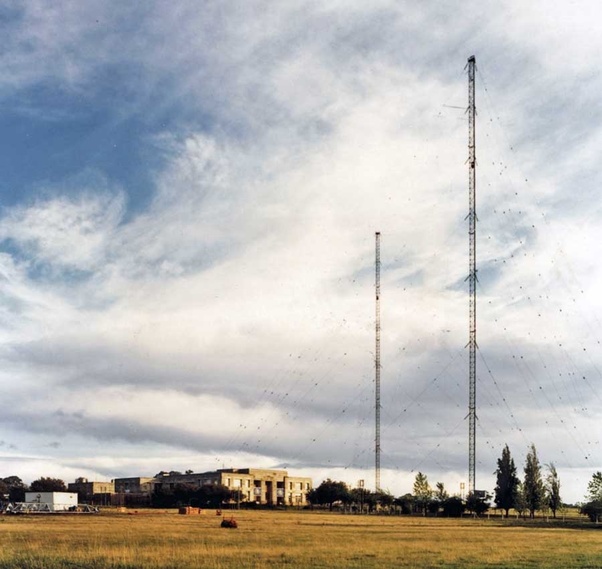
The BBC has begun broadcasting an occasional short message on Radio 4 Longwave, suggesting that it will soon close. Although no date is given in the recorded announcement, there is no reason to believe that there has been any change to the previously proposed date of September 2026.

The message, in explicitly referring to ‘198 kiloHertz longwave’, may be the first time that longwave has been mentioned by name on BBC Radio for over two years, when the final midday Shipping Forecast concluded ‘thank you for listening to BBC Radio 4 Longwave’. Since that time, an unspoken policy seems to have prevailed over all BBC continuity announcers, who may refer to FM, DAB, ‘smart speakers’ and BBC Sounds but never, seemingly, to longwave, as though the platform had already been abandoned and simply did not exist. Until now, its listeners had been entirely ignored.

The message also represents the first ‘opt-out’ for the longwave service since 31st March 2024, after which Radio 4’s longwave and FM/DAB schedules were made identical. Prior to that time, programmes such as Yesterday in Parliament, the Daily Service, Test Match Special (until summer 2023) and the Shipping Forecast at midday and 17.54 were available on longwave only, whilst Radio 4 FM carried other programmes.

All this comes as the petition to keep Radio 4 Longwave continues to grow, with over 7300 signatures as of 25th April 2026. 24 MPs of various political parties have also signed an Early Day Motion in parliament calling on the BBC to consult more widely before the longwave service is axed. The Campaign to Keep Longwave continues to encourage supporters to write to their MPs, asking them to sign up to this motion if they have not already done so and therefore show their support for a nationally important service.

Furthermore, several calls were made last week to the BBC’s Feedback programme, expressing yet again the many reasons for retaining longwave and asking the BBC to reconsider its stance on the issue. The programme will be repeated on Radio 4 Longwave (and FM, DAB and online) at 20.00 BST on Sunday 26th April, and is available to download or stream from the BBC website (the longwave discussion begins 17 minutes in).

Whilst the BBC seems to resigned itself to longwave’s closure, the Campaign to Keep Longwave continues to press for a change of stance, making again the arguments expressed in our report Still Speaking to the Nations. These include reasons of national security in increasingly turbulent times, resilience to natural disasters, rural coverage and energy efficiency.

Despite claims to the contrary made even on this week’s Feedback episode, the technology required to broadcast on longwave for decades to come is by no means unobtainable, and the three transmitters could be re-engineered at a cost amounting to just 0.3 per cent of the BBC’s annual budget according to the corporation’s own figures. The BBC has refused to engage with suggestions of how this funding could be obtained through grants, governmental support or crowd-funding, preferring instead to push ahead with the shut-down regardless of funding options.

It is inevitable that the makers of the BBC’s Feedback programme have to cut down telephone messages to fit everything into half an hour. However, it is perhaps telling that the BBC chose not to broadcast the following impassioned part of one of the messages that they relayed, the sentiment of which is worth repeating here:

“The BBC is running an ad campaign at the moment entitled ‘this is our BBC’. Well, for those of us who rely on longwave, this is our BBC: Radio 4 Longwave. Why is the BBC refusing to listen to its audience and license-fee payers, and refusing to provide an adequate response to listeners at home and abroad and even MPs about saving this vital national and international service? Please, BBC, don’t abandon us, and keep Radio 4 Longwave.”

Please sign our petition and write to your MP if you haven’t done so already, and send a message to BBC Feedback if you are able. All the help and support we can get is urgently needed. Otherwise, our BBC may simply cease to exist.


Addendum: Feedback clip about Longwave available to view on YouTube

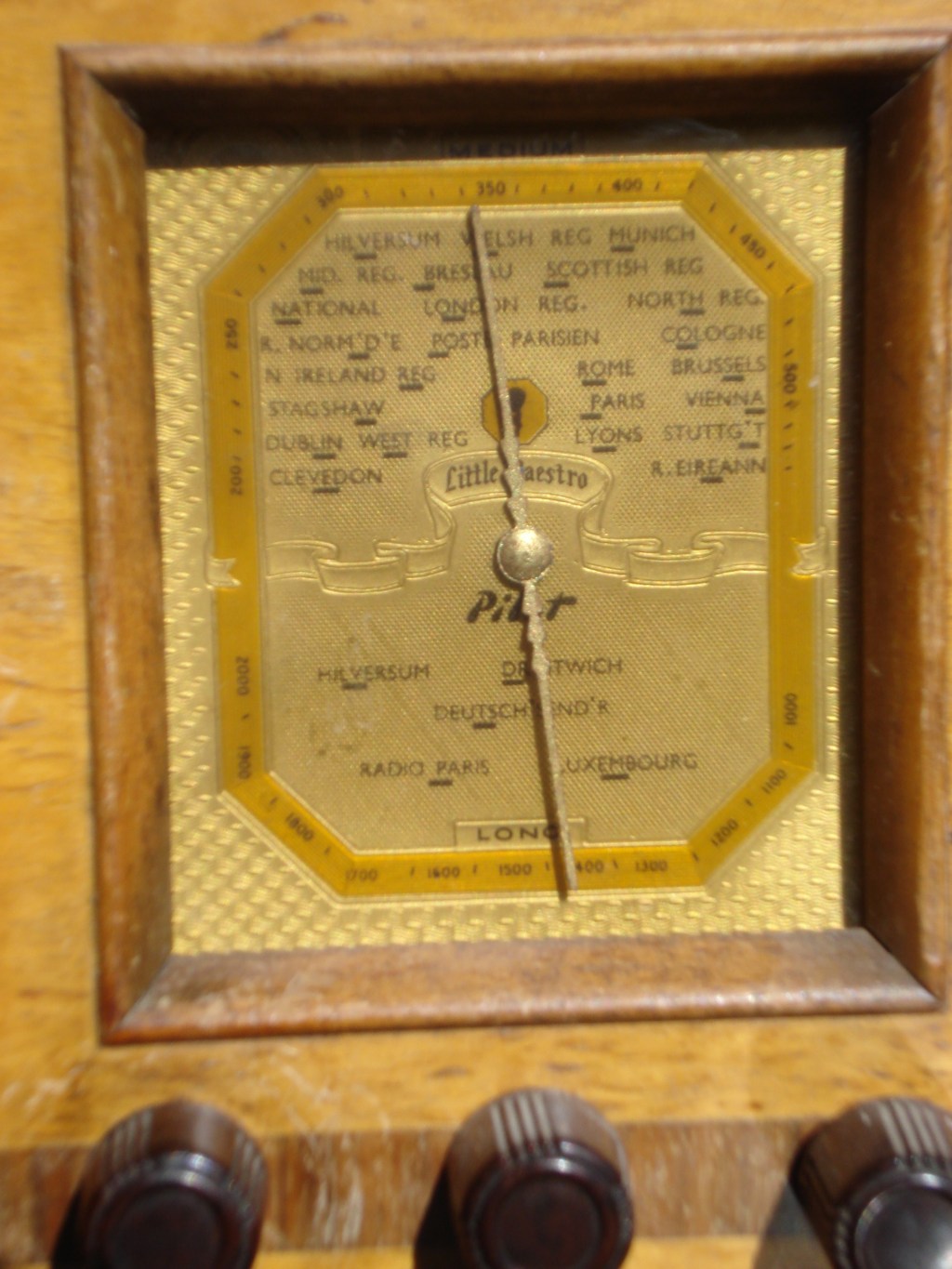
You can watch a YouTube video of the discussion on BBC Radio 4 Feedback programme about longwave as received through a vintage longwave radio at the following link:

Courtesy of Tilly Up North.

9 responses to “This is Our BBC: But new Longwave ‘opt-out’ suggests its closure”

  1. Lynn Avatar
    Lynn

    Be heartened! We are having an effect. My MP Simon Opher has signed and agrees with points I put to him. Keep going!

    Like

  2. Heather Luk Avatar
    Heather Luk

    Please – can you put together some vital points we can use to write to our MP and to the BBC ?

    Like

  3. Martin Lacey Avatar
    Martin Lacey

    Interestingly an unusual occurrence happened this week regarding FM and DAB radio signals here in Norfolk where we are staying this week. Due to high pressure conditions virtually all FM UK radio stations were blocked out by European stations. DAB BBC stations were also affected with no coverage other than BBC Radio Norfolk. As far as I know Longwave wasn’t affected by this unusual weather phenomenon. In addition digital TV station’s were difficult to receive. Fortunately yesterday everything was back to normal and FM and DAB were being received as normal. I found listening to foreign stations intriguing but worrying if we only relied on digital platforms solely.

    Like

  4. desmondwalshd Avatar

    Here in Ireland we had Radio 1 on 252kHz (unfortunately shared with Algeria) and was shut down in 2024 , the high mast destroyed shortly afterwards . Already the 567kHz transmitter in Co.Meath and it’s high mats were unceremoniously removed . RTE were more interested in their digital involvements . But their involvement in DAB eventually became Dead And Buried. Now we have no reliable broadcasting alternative to speak to the nation if the digital links were taken down . BBC will be the same . The decisions being made are short term with no plans for future scenarios. I think that these broadcasters see future transmissions solely as vis broadband fibre and to ‘smart’ phones. Save us from such stupidity . Des Walsh , Cork, Ireland

    Like

  5. Anon Avatar
    Anon

    Now there is something that can be done in these last few months. It doesn’t need many people to do it either; just a few of you will do. I am going to start by placing two links:

    http://www.gov.uk/government/groups/the-national-positioning-navigation-and-timing-office

    … and here’s the contact address:

    npnto@dsit.gov.uk

    If you have a technical background, or you are a radio ham, or you have an enquiring mind, and you have a little spare time, read on.

    It’s no coincidence that Radio 4 is running trails for the end of longwave at the precise time the Radio Teleswitch Service for Economy 7 is entering its last few months of operation. If Economy 7 didn’t exist, this Keep Longwave campaign would have been run over ten years ago. Saving Radio 4 LW (or introducing some other BBC service on LW) is intrinsically linked to finding another sponsor to justify radiating a utilitarian signal on 198 kHz. Fate is working in our favour.

    The UK Governments Position Navigation & Timing Office is freshly baked, and still warm. A surprising number of very crucial things, including Financial Services in the City of London depend on precise atomic clock timing from GPS satellites. Some of our neighbours (like Norway) are already experiencing malicious interference to GPS. The UK economy will be toast if the government doesn’t act quickly. To educate yourself in this matter, the National Physics Laboratory have a very good video on the RI channel you should watch before taking action. I also recommend reading up and understanding the principle behind Hyperbolic Navigation.

    The UK has no money, and no army of engineers on the starting blocks to enact a PNT campaign built from scratch. What it does have is much of the infrastructure already in place that can be adapted at little cost. The BBC Longwave sites are perfect for the job, and all optimised to work efficiently at 198 kHz. The key parameters for the Governments PNT initiative include resilient timing signals everywhere in the British Isles, a separate timing scheme for the MOD and an accurate replacement for GPS positioning. Hyperbolic navigation systems will work on any frequency. A commercial navigation product called e-LORAN requires masts optimised for 100 kHz that would need to be built from scratch at huge taxpayer expense. For a nation the size of the UK, the same technology will work on 198 kHz and the kit already exists, purchased by BBC license fee payers. The frequency is already our property.

    To my great annoyance, the devils at OFCOM have expunged some wording from the current UK Frequency Allocation Table. Participants in this initiative will need to go online and find the UK FAT issue 17 as a PDF dating from 2013 where you will find footnote UK15 against 198LW. This is an international broadcast band, you cannot use it for PNT data transmission without it accompanied by a BBC broadcast. No GQT; No PNT!

    A very few, well informed, well thought out emails to the PNT office (and a scattering to NPL itself) from you guys should “put the idea” of cutting costs by using BBC LW infrastructure into their heads. It needs to be on their agenda.

    Don’t bang on about saving Radio 4. Emphasize the cost savings involved and tactfully point out that adding a BBC broadcast is helping the BBC meet its Royal Charter commitments for full coverage of the UK. Point out that a few remote places rely on it.

    Don’t reveal that this is a coordinated effort. Make your approach matter-of-fact and sound like you thought of the idea independently. Pick a random day in the next few months to send your email.

    Do say that the cost of PNT is borne by the tax payer, and we’ve already paid for the sites.

    Do remind them that off-the-shelf broadcast transmitters are available which will do everything they need, including a lucky bonus of amplitude modulation.

    Do remind them that Droitwich is likely to be Grade II listed, and that continued use is a good way to pay for the maintenance.

    This is our secret (winks, taps nose with finger). Nobody from Gov.UK will be reading these comments. We are not being dishonest either. The kit and the frequency is ours and it’s a no-brainer to use it for PNT. It really can save tax payers money and keep longwave.

    Thanks.

    Like

  6. Mark Pritchard Avatar
    Mark Pritchard

    keep our long wave if you want our licence fees. Get rid of BBC world service as it is for Africa not Britain. Rather fed up supporting overseas broadcasting when our reliable UK service is shut down . DaB is rubbish here in East Anglia but long wave always works. It is also a serious security backup in time of national crisis reaching the whole country. Why is it okay for our BBC to broadcast to the world ( and licence payers support this , it’s not for the licence payer? It’s not interesting broadcasting for UK nationals) and what we do use and want to maintain the BBC can just remove it as an option. No wonder people don’t want to pay the licence fee . I pay the licence fee but this is making me want to stop( I pay but don’t use the BBC except with long wave and occasional R4).

    Like

  7. fortunatelyf79f64107d Avatar
    fortunatelyf79f64107d

    Thank you for your campaign. Not only is reception on FM in our area of Hampshire less reliable than on Long Wave, we also use radios that receive the BBC broadcasts only on Long Wave. Are we meant simply to throw these radios away?

    (Dr) Lars Mosesson

    Like

  8. Andrew Rutter Avatar
    Andrew Rutter

    Parliament’s Joint Committee on National Security Strategy met on April 29th 2026. Evidence was given by Lord Robertson & Dr. Fiona Hill for the discussion on National Defence & Resilience. The main observation from these two distinguished persons was we, as a population, are not being informed enough about the risks from hybrid warfare and what could develop from that. Over an hour & 25 minutes was devoted to how the Government should inform people and what was more usual in Continental Europe of countries doing that. E.g. The 72hr cupboard of food stocks, torches, batteries, battery or wind-up radio, etc. But how would the Government communicate? No good asking your ‘SmartSpeaker’ – “Please find me the latest Government update on Internet, Electricity, Transport “ – Whatever? It probably will be as dead as the Dodo. But Long Wave could be that ‘go & listen to’ for all the reasons mentioned about coverage, simple radio technology, etc. But if everyone is throwing away their older radios, particularly battery portables in favour of smart speakers & mobile ‘phones, then we need a rapid change of direction.

    Like

    1. Anon. Avatar
      Anon.

      Andrew Rutter. Thank you for citing this Parliamentary Review. I have watched all of it and put together a pack detailing how the longwave infrastructure can be used to create a low cost Hyperbolic Navigation system operating at 198 kHz, complete with embedded timing for MOD and other economic purposes. I have highlighted the legal necessity for such a navigation system and timing source to be accompanied by a BBC broadcast for it to fall within ITU rules.

      I have also highlighted the ongoing need for covering remote parts of the UK with such a signal. I have stressed the cost savings over building an eLORAN network from scratch. This pack has been emailed to one of the addresses where Dr Fiona Hill can be contacted, and is for her attention.

      However, judging by the latest news, I think I am too late…. at least for this particular solution to the problem.

      Like

Leave a comment