A week after the BBC ended transmitters on 198 kHz longwave, a campaign is beginning to ensure that the BBC’s medium-wave broadcasts do not face the same fate. Although we continue to campaign for the reinstatement of longwave broadcasts in some form, medium-wave represents a next-best option, providing essential radio service in more remote regions and a reliable backup option when other means of communication fail.
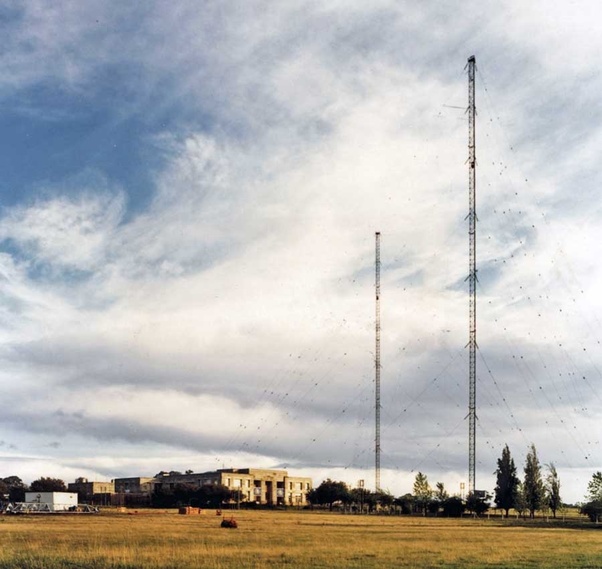
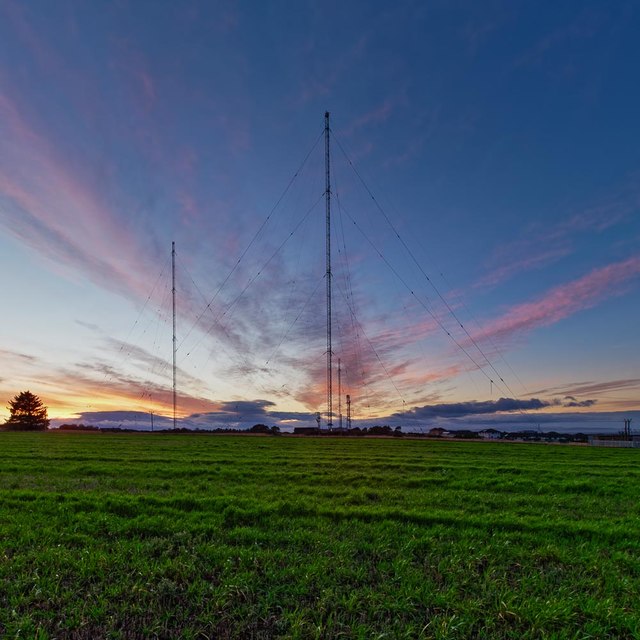
A new petition has been launched on the change.org platform, calling on the BBC and government to work together to keep BBC medium-wave, which had been slated for potential shut-down as early as 2027. This includes transmissions on Radio 5 across the UK, Radio Scotland and Radio Wales. The image at the top of this page shows the Burghead transmitter, which broadcasts both Radio 5 on 693 kHz and Radio Scotland on 810 kHz. The older petition to Keep Longwave also remains active, calling on the BBC to reinstate longwave transmissions, perhaps using the BBC World Service, as it can carry signals across much of Europe.
Medium-wave signals are significantly shorter than longwave, and cannot travel as far. However, they still retain many advantages over FM and digital broadcasts. Medium-wave can travel across entire regions of the UK, meaning that only 22 transmitters are needed to cover the entirety of the country with the national medium-wave signal for Radio 5 on 693 and 909 kHz. Indeed, two frequencies are used for this because the areas of coverage from the 22 transmitters overlap, and this helps prevent interference. Compare this with the 214 transmitters needed to provide national FM coverage. Overall, we would rate longwave as the best means of national broadcasting, but Medium-wave is a close second, as shown in the table below.
| Radio | LW | MW | FM | DAB | Internet |
| Range | Excellent | Good | Poor | Poor | Excellent |
| Rural availability | Excellent | Good | Poor | Poor | Poor |
| Reliability | Excellent | Excellent | Good | Good | Poor |
| Speech quality | Excellent | Excellent | Excellent | Good | Good |
| Music quality | Good | Good | Excellent | Good | Good |
| Energy Efficiency | Excellent | Good | Poor | Poor | Terrible |
| Cost to transmit | Excellent | Excellent | Poor | Good | N/A* |
| Cost to receive | Excellent | Excellent | Good | Poor | Poor |
The long-range transmission of medium-wave means that it can reach many remote areas that FM and digital signals cannot, albeit not the extent of longwave. It also means that in the event of a local power cut which knocks out internet, DAB, FM and mobile signals, MW can continue to provide news and information – a feature that may be imperative in times of national crisis. Unlike longwave, medium-wave in the UK is broadcast from modern transmitters that are not likely to fail in the near future and do not need significant re-engineering to continue working into the future. Plus, a national MW channel is less energy-intensive and less costly for the BBC to broadcast compared to a national FM signal. For all these reasons we believe that the BBC would continue to support MW broadcasts were public support for the platform to be made clear.
The BBC suggested in 2022 that Radio 5 Live might leave Medium-wave in 2027, but in the intervening years no further announcements have been made on the subject. The closure this month of transmitters at Redruth and Folkestone in the south of England are not part of a gradual close-down of Radio 5 on medium-wave. Rather, these were top-up transmitters on low power intended to serve areas where coverage on Radio 5 was poor because of interference from medium-wave broadcasts from Continental Europe. With the end of those broadcasts, the Redruth and Folkestone transmitters became redundant and listeners have been advised to retune to Radio 5 from other nearby transmitters. ‘To continue listening to BBC Radio 5 Live in the Folkestone Area, please retune your radio to 909 Medium Wave’ says a message on the BBC’s reception website.
Many of those with older radios – including older car radios – would benefit from the continuation of medium-wave broadcasts, especially if they are fans of sport or seek a reliable source of news when travelling through rural areas. AM radio, including medium-wave, suits itself especially well to this use, providing a rich sound for spoken word programmes that is often preferred to the squeaky-clean sound of digital radio, and without the hiss and garble of FM and DAB in areas of poor reception. But it is in emergencies that AM radio comes into its own: in the United States, it is being mandated that new cars retain AM reception capabilities for this very reason.
At the campaign to Keep AM Alive in the UK, we would like to see similar considerations made by the UK government. As part of an upcoming Radio Review, we would like to see the continuation by the BBC of at least one nationwide medium-wave signal made mandatory for the sake of national security. We would also like to see frequencies for the BBC’s medium-wave services mentioned at least occasionally on-air, as was previously the case, so that the public remains aware of where to access these services. Telling people to simply ‘ask your smart speaker’ to play the radio will be no good in an emergency in the instance of a power cut or when fragile internet connections fail. Good old-fashioned medium-wave remains the best fallback option for nationwide broadcasts, and should be retained for this reason even if FM transmissions are brought to a close during the 2030s.
We would love to see the resurrection of longwave to provide nationwide radio coverage. In its absence, however, medium-wave remains the next best option. Please support our petition to keep medium-wave, and help keep the future of UK radio secure for everyone’s benefit.


 Keep AM Alive
Leave a comment