Government advises to ‘be ready’ for emergencies – including analogue radio

Published by

on

The UK government has just launched its ‘be ready’ campaign, encouraging citizens to be prepared for survival in emergencies. This includes access to a battery-powered radio – but the advice comes months after the UK’s only guaranteed nationwide signal, Radio 4 Longwave, was switched off.

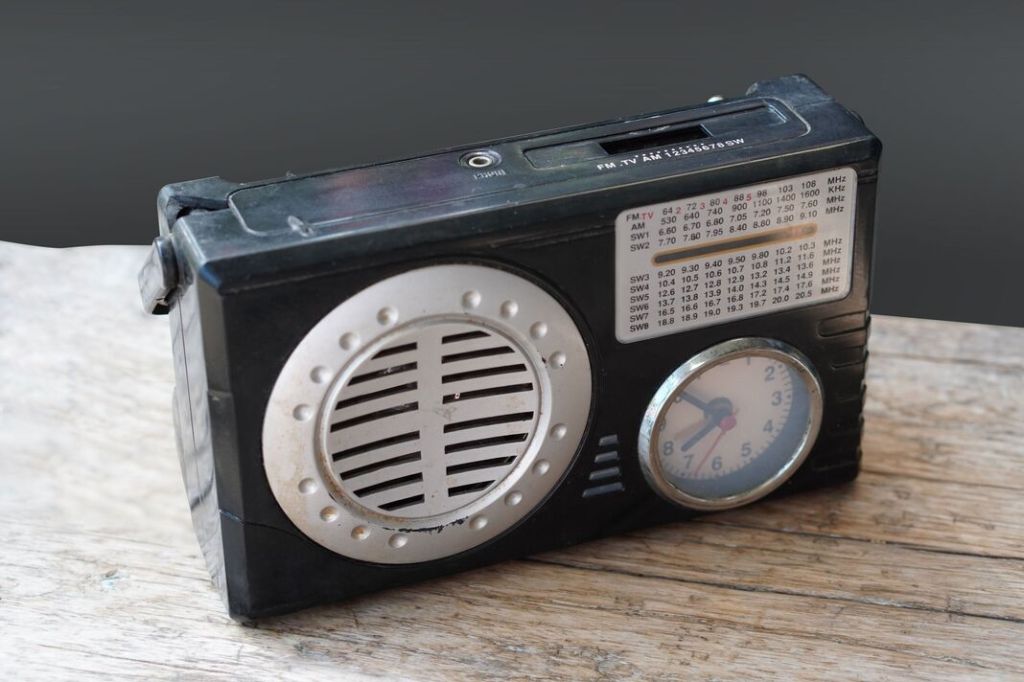
With supplies of basics including food and water nowadays depending upon complicated distribution networks, and services increasingly moving online, the country is arguably more vulnerable than it has ever been when infrastructure is disrupted. One key area of concern is ‘communication and information’, with the government recommending that people keep a battery-operated or wind-up radio in reserve. ‘For updates during outages,’ the advice stipulates, ‘write down frequencies of any national or local radio stations you use for news.’

The government advice only mentions FM radio, in spite of the fact that FM is dependent upon local transmitters – which might also be affected by any local calamity such as a storm or power outage. FM is short-range and cannot travel easily from alternative transmitters further away. It is also patchy, with many rural areas struggling to get a reliable signal. Finally, FM radios require a lot of power, and are unlikely to last very long on a single set of batteries.

Resilience in emergencies is one of the key advantages of AM (longwave or mediumwave) radio, and one of the main reasons why the Campaign to Keep AM Alive continues to advocate for its continued use. With a network of only around 20 transmitters, the BBC is able to broadcast Radio 5 on mediumwave reliably across the entire country. In light of the government’s new advice, efforts should be made to ensure that the channel’s frequencies – 693kHz and 909 kHz – continue to be mentioned on-air, so that people know where to tune to when the internet is down and other transmissions cease operating.

The recent shut down of many websites based on the PHP programming language is just the latest in a series of indicators showing how vulnerable the internet is. As well as bugs and the potential for hackers to deliberately bring websites down, there is also a danger that a major geomagnetic storm from the Sun – similar to the Carrington Event that disrupted telegraph communications in 1859 – could knock out satellites and bring down the internet. Storms and floods – made more likely with climate change – can also disable local infrastructure. Storm Austen, currently afflicting the south-west of England with winds of up to 70mph, is one example of how local services can be severely disrupted.

The main advantage of old-fashioned AM radio is its ability to travel large distances, potentially reaching into an area suffering from power outage or other disruption from outside, and that it does not depend upon vulnerable internet infrastructure. It can also be received cheaply and easily using wind-up radios, and does not require very much battery power to receive compared to FM and digital signals, so a back-up radio will work for longer on AM.

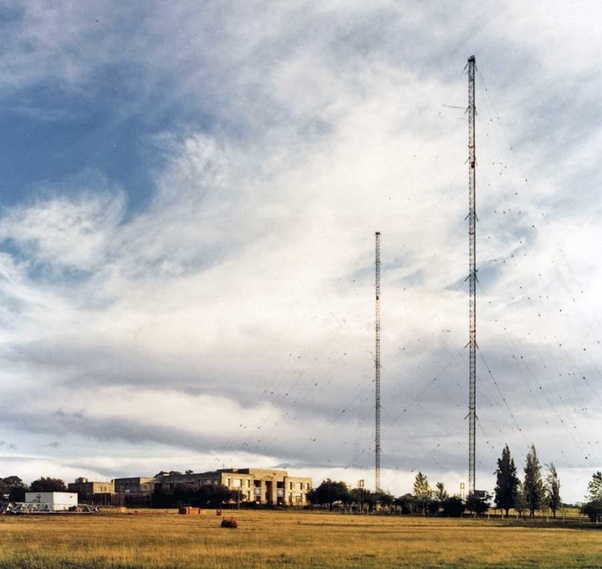
The most effective means of maintaining a resilient communications infrastructure would have been to retain transmissions of Radio 4 Longwave nationally on 198kHz from just three transmitters; unfortunately and short-sightedly, this option was switched off in June of this year. The government refused to intervene in the BBC’s decision to do this, stating that it was a ‘matter for the BBC’ and seemingly forgetting the importance of this piece of national infrastructure. The second-best option, a national network of mediumwave transmitters that covers almost the entire country, is still operating – and we continue to petition the BBC and the government to ensure that this remains the case. Please sign our petition to keep mediumwave if you agree:

https://c.org/NXKmrTY2Mh

You can read the government’s ‘be ready’ guidance in full at the following website:

Be ready for emergencies – Be Ready

13 responses to “Government advises to ‘be ready’ for emergencies – including analogue radio”

  1. andyrutterceff104e84 Avatar
    andyrutterceff104e84

    The Government have arrived late at the party, but I’m not sure the BBC has had an invite, especially as the new DG is from the Internet and the trend is not to have ‘linear’ broadcasting. As so much is outsourced in so many organisations I fear the BBC & other broadcasters will be told the ‘fairy stories’ of how systems are too old to keep going, expensive, no one makes certain equipment any more, etc. Does the company operating Transmitters have the staff? I’m aware of redundancies. Has the scrap metal men already started on dismantling Long Wave kit? As said, the ideal simple Radio that was Radio 4 Long Wave, indeed would have been the ‘listen to’ station for all manner of reasons. Rather than calling it ‘old fashioned radio’ especially as it gives the impression that radio waves are too old now as the ‘Internet of Everything’ is the way to go, any or all of both transmission and reception on AM can be as up to date and modern if we want to spend suitable finances on it.

    Like

  2. mark beckwith Avatar
    mark beckwith

    In an emergency I have the radio..what I don’t have is the frequency…long wave..

    Like

  3. warmexpert94f1131810 Avatar
    warmexpert94f1131810

    You’re not quite right about FM being more power hungry than MW/LW. That’s not inherently true.

    My Grundig G5 radio (analogue FM/LW/MW/SW radio with a digital display) lasts a week or more with normal FM use and rechargeable batteries, even longer with single use alkalines. Older ‘string and pointer’ battery FM radios also last a very long time.

    However, it’s true that battery DAB/DAB+/FM radios such as my Majority Eddington only last a relatively short time regardless of whether DAB/DAB+ or FM is in use. That’s because everything is on one silicon chip, the radio is effectively a small computer and the power consumption is much the same whether it’s receiving DAB/DAB+ or FM.

    It would be better to promote having a wind-up radio or a radio without DAB. For those who need DAB/DAB+ because their FM/MW reception is poor then getting a DAB/DAB+ radio with a power-in socket and a power bank should be considered.

    Regards,

    Gerry

    Like

  4. Squid Avatar

    FM can go a surprisingly long distance, a community station nearby me can be received outside over 15 miles away even though it’s less than 300watts! However a AM transmitter with the same power output would be able to travel far further.

    Also I’ve noticed that the only stations that regularly mention their frequencies on-air are community and small-commercial stations!

    Like

    1. Jakub Fabo Avatar
      Jakub Fabo

      talkSPORT does it as well

      Like

    2. Stephen Coates Avatar
      Stephen Coates

      I used to listen to commercial radio in the 2000s, where stations quite literally made a song and dance about their frequencies. After 2010, and with many stations networking (or at least co-locating and sharing staff), they didn’t bother any more and just made generic statements about being “on air” and “online”.

      Like

  5. Mike Hoar Avatar
    Mike Hoar

    Get the idea of FM in emergency scenario, but its coverage can be patchy and the signal seems less ‘strong’ than it was. Also for national broadcasting does the FM network of transmitters rely on digital links for receiving the content before transmitting ? AM may be the same, but one transmitter has wide coverage.

    Like

  6. scrumptiouslyfree8c87f0d7ce Avatar
    scrumptiouslyfree8c87f0d7ce

    I’m a Hungarian, from the Carpathian Basin, Central Europe – about 1700 km (1000 ml) away from the English radio transmitters. I could hear BBC 4 on LW quite well during nights – and I listened a lot at that time. Now I have to choose 693/909 or 1053/1089 kHz if I want to listen something in English during night time. It’s impressive how well these MW stations can be received despite the distance. So yes, AM broadcasting is definitely the long range transmission. I have never heard any English station on FM so far, and I probably will never hear in the future either.

    Like

  7. cmoore4849 Avatar
    cmoore4849

    The government’s advice to maintain or purchase a wind-up/ battery radio with fm capability (funny how they don’t mention the more resilient am which would have far greater far coverage in an emergency) makes a mockery of the obsessive drive by the BBC (and other mainstream broadcasters) to put all their ‘radio’ stations (and tv) online only.

    Liked by 1 person

  8. andyrutterceff104e84 Avatar
    andyrutterceff104e84

    This evening’s BBC Newsnight discussed ‘Resilience’ & the Gov’s plan and interviewed various suppliers of what extra consumers were ordering. Answer included – Wind up radios which have been sold out in some places! The politics of this advice was argued about by the contributors but not really a mention of which actual radio stations to tune into. Cornwall was mentioned as a storm had cut off people, so briefly mentioned was Radio Cornwall. Comments were made about how reliant everyone is on internet based comms, etc. But again the BBC programme did not discuss anything technical about which AM or FM service to listen to if for instance a cyber attack shut down the internet. Not very diligent by the BBC presumably knowing this 72 hr Resilience Plan has been talked about for some months. Judging by how the general public have taken to the 72hr cupboard idea with increase in suitable storage kit & food, the BBC as I mentioned previously are a tad late to the party! It really would be ideal if not too late restarting Radio 4 on Long Wave. Basic Radio with excellent coverage and battery receivers with low power consumption as well.

    Like

  9. Susan Avatar
    Susan

    It’s no good to have a radio in an emergency if there’s nothing to pick up on it. They’ve said their goal is to eventually go “internet only”, yet come out with this advice.

    Liked by 1 person

  10. andyrutterceff104e84 Avatar
    andyrutterceff104e84

    The BBC’s David Sillito has an interesting piece this morning (Sat Nov 7) on their news website, “ What happens if all the lights go out?” Although mentioning FM radio as the ‘listen to’ network, no mention of AM whether Medium Wave or the closure of Long Wave. From another source it seems the changeover in Switzerland to DAB and closure of FM went down like a lead balloon and has had to be reversed with FM to be re-instated.

    Like

  11. Varyar Avatar
    Varyar

    I can receive BBC Radio 5 MW (693 Khz) from Spain. I thought it would be hard; a very simple self-made AM receiver is instead enough. I liked much more the BBC Radio 4 LW, because I’m not interested in sports, but I like to know that I can receive a station that in case of emergency might transmit news and updates from abroad.

    Like

Leave a Reply