BBC Longwave set to close in September

Published by

on

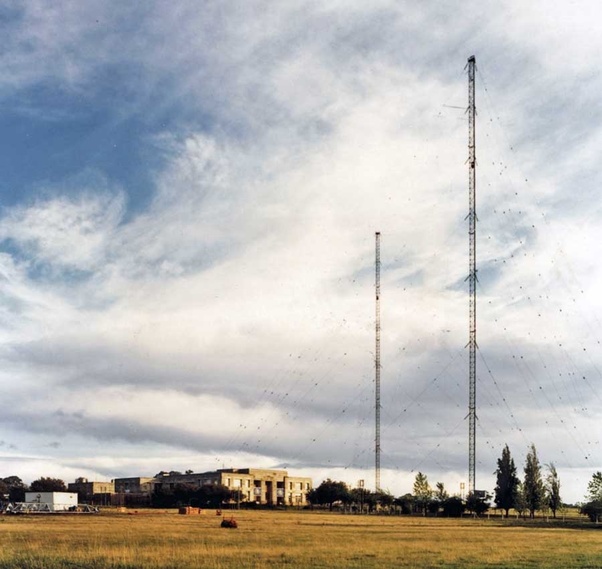
The BBC still intends to close down its Radio 4 Longwave broadcasts in September 2026, the BBC’s distribution department has revealed. This would mark an end to BBC broadcasts on the platform after more than a century’s service, and would come exactly 92 years after the main Droitwich transmitter was switched on. This is in spite of over 7000 people so far signing a petition to keep BBC Radio 4 Longwave, and 23 members of parliament supporting an Early Day Motion that questions the move.

Asked about the reasons for the shut-down, a BBC spokesman denied that financial pressures are the only motive for closing longwave. ‘Unfortunately, the decline in listeners and the reduced availability of longwave receivers mean that, for the majority of licence fee payers, closing the service is the fairest and most sustainable option,’ he said, citing figures that 75% of listening now takes place via digital means, including online.

However, this fails to account for 25% of listeners (amounting to several million people) still using analogue radios in the UK, listeners in areas of poor coverage, listeners abroad in northern Europe where BBC Sounds is no longer accessible, and the fact that longwave remains reliable when the internet and digital transmitters are down.

All of this has been pointed out to the BBC on several occasions since the closure was mooted in 2023. Yet the BBC spokesman confirmed that ‘a decision to close the platform has already been taken’ following an ‘impact assessment’, the scope and consequences of which have not been made public.

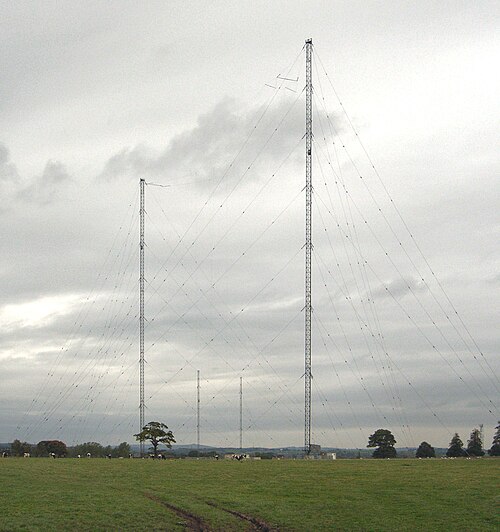
It took intervention from Liberal Democrat MP Tim Farron, a supporter of longwave, for the BBC to finally reveal last month its estimated costs for running and maintaining its network of three longwave transmitters. The corporation estimates that it would take £18 million to ‘re-engineer’ these transmitters, which currently rely on 1980s technology based on valves that may fail in the near-future. Meanwhile, it costs around £1.5 million per year in electricity to run the transmitters.

Several options for providing this funding have been suggested to the BBC, including the use of solar panels at the transmitter sites, which the spokesman admitted was ‘logical’. Another possibility would be for the BBC to apply for heritage or extraordinary governmental funding to cover the costs of maintaining a critical piece of national infrastructure available for anybody and everybody to use across the country and beyond. Such ideas were dismissed with the excuse that ‘financial considerations are only one part of a much wider picture’, which contradicts the BBC’s earlier claim that longwave needed to be shut down to save costs.

For context, £18 million to re-engineer the transmitters constitutes 0.3 per cent of the corporation’s £6 billion annual budget, which some would consider a bargain for such a long-range flagship transmitter system. The £1.5 million annual operational costs equate to the license fee paid by approximately 7000 people – coincidentally, the same as the number of people who have so far signed the petition to keep longwave. Most of the these are UK listeners, and given that some listeners to longwave will not have signed the petition and may not be aware of the impending closure, one could argue that Radio 4 Longwave’s listeners pay for the service themselves.

It was also suggested to the BBC that, given that all listeners abroad and the vast majority of the UK’s listeners to longwave live in areas covered by the Droitwich transmitter (all of England and Wales, Northern Ireland and parts of Scotland), costs could be reduced by only re-engineering and running that transmitter and allowing the two smaller repeater transmitters in Scotland to be retired. This would still retain most of longwave’s benefits, but compromise the signal quality in some parts of Scotland. This idea was rejected by the BBC.

Somewhat confusingly, having argued that the longwave transmissions are redundant in the digital age, the BBC spokesmen went on to say that the two Scottish transmitters ‘provide essential longwave coverage across the UK, particularly in Scotland.’ He added that ‘It would not be appropriate to reduce coverage in one of our nations if we were actively considering continuing the longwave service.’ Again, it is worth noting that many areas of Scotland can receive transmissions from Droitwich.

The Campaign to Keep Longwave continues to argue that the BBC’s decision to close the longwave platform is the wrong one, and is attempting to engage policymakers in the battle to save this essential service that could be relied on by millions in an emergency. Please sign and share our petition to keep longwave and consider contacting the BBC to air your thoughts on this vital issue. You can also write to your MP, asking them to hold the BBC to account on this important issue.

14 responses to “BBC Longwave set to close in September”

  1. jovial41a5d83dc2 Avatar
    jovial41a5d83dc2

    I can’t believe that the BBC are stilling planning to close BBC Radio 4 on Long wave; as-well-as other stations on Medium Wave. And yet they pay TV presenters ridiculous amounts of money while not providing much.

    Squirming 🦑

    Twitter: http://twitter.com/Squidygame

    Website: http://151.244.232.25/

    Like

  2. Rhys Thomas Avatar

    “reduced availability of longwave receivers”? That is not an argument; LW receivers are so easily constructed, it’s pennies worth of semiconductors to put one together. And car radios come with LW, particularly relevant since the VHF FM Radio4 service is non existent in parts of Wales, despite all the repeaters.

    I think that only a widespread internet outage would force the BBC into reconsidering its LW tx closure. Such a shame.

    Like

    1. Varyar Avatar
      Varyar

      Totally agree. My car is new and it does have LW mode too.

      Like

  3. chrishunter Avatar

    The additional serrvices carried by the Long Wave signal are irreplaceable, and the frequency accuracy – traceable to the National Physical Laboratory Caesium Standard Clock – is really useful as a precise calibration source. I went to a lot of trouble to accomodate the previous change of frequency (from 200kHz to 198kHz) on my Frequency Standard Unit in my Laboratory! My hard work and design will have been wasted!

    Like

  4. chrishunter Avatar

    This sercice is irreplaceable. Even the frequency accuracy (traceable to NPL) is useful – and I use it as a frequency standard reference in my Lab. I went to a lot of trouble to accomodate the previous frequency change (200kHz to 198kHz), to allow my frequency standard unit to give accurate outputs!

    This is just wrong-headed modernism, and doesn’t take into account the appalling coverage of DAB (aka “Dead And Buried”), and the huge (and variable) delays incurred in all the digital media. I still don’t understand why the brain-dead BBC persist in transmitting the Time Signal “Pips” at the hour on their digital services!

    This needs to be stopped. The valves used in the transmitters are still available, and construction of suitable replacement solid-state transmitters wouldn’t break the bank!

    Like

    1. Martin Clostermann Avatar
      Martin Clostermann

      the only reason I see for sending a peep on the delayed digital signal is, the broadcasters from abroad do it as well or in a similar way. Eg. Here in Germany the German news “Tagesschau” at 8 o clock pm MEZ begins with a gong. Not telling viewers that this gong is a retared signal by several secundes.

      Like

  5. Max Jakobssen Avatar
    Max Jakobssen

    Oh no, not another LW station closing. The only real radio.

    Like

  6. Steve Ball Avatar

    We rely too heavily on digital technology. AM is all but gone and replaced by DAB that in my area drops in and out. (Most frustrating) especially on a long drive. And now ling wave radio 4. Total shambles.
    internet radio etc is ok but long wave is far superior in resilience and us almost totally live with no delay unlike digital. Sometimes new isn’t always best.

    Like

  7. David Haworth Avatar
    David Haworth

    longwave radio would be essential in any emergency if the Internet and digital radio were knocked out it is the only frequency with such a wide coverage and would be the only means of reliable communication if we ever go to war

    Like

  8. Bob Avatar

    We have every digital platform here but use 198 LW daily. The time signal is the only accurate one available on broadcast.

    20 million digital listeners on battery and/or mains also use power. The amount must knock a big dent against the cost of all those DAB and DAB+ transmitters and the cost of keeping LW on the air.

    But it was never meant to serve France – try telling the people of Northern France whose only English speaking broadcasts widely available are R4LW and the ever reliable Radio Caroline on 648AM.

    Many folk can happily afford to listen to R4 on a digital device and replace batteries monthly, or be tied to a socket. The same batteries playing long wave will usually last a year.

    Like

  9. Varyar Avatar
    Varyar

    I really hope they change their minds. I’m receiving BBC from Spain these days and I’m trying to build a LW radio sensitive enough toreceive it too.

    I’m listening it because it is in LW: maybe they don’t care, but I won’t listen to BBC anymore if they shutdown LW.

    Like

  10. Peter Clarke Avatar
    Peter Clarke

    It’s seldom realised that DAB relies on signals from GPS satellites. This is not a contractual service, it relies entirely on the goodwill of the US government and could be disabled, switched off or knocked out at any time, especially during international conflicts or crises. Needless to say, that’s when it’s critical for everyone to have access to a portable radio, so DAB won’t suffice. Obviously, the radio needs to have a long-lasting battery, so that also rules out DAB. Even strong solar flares can disrupt GPS.

    This isn’t just theoretical, problems have already been experienced.

    https://www.bbc.co.uk/news/technology-35463347

    Given these problems (not to mention the scary unpredictability of the current US president), it’s irresponsible not to retain LW as a reliable fallback.

    Nor should the valuable ‘soft power’ benefit of reaching significant audiences in the RoI, France, Benelux etc be overlooked.

    Like

  11. Anon Avatar
    Anon

    The BBC are trailing closure messages on LW. Really? Have they asked permission from their bosses, the power utilities?

    Depending on which power provider you are with, there are reported to be between 154,000 and 196,000 RTS meters still clicking away in cupboards under your stairs. Between the intervention of the RTS Task Force in autumn 2024 and today, only around 400,000 of the estimated 600,000 RTS meters have been replaced. Reportedly less than 200,000 remain to be removed at the time of this post. Those remaining are the real “sods to get at”, on isolated Scottish islands or with apathetic customers who don’t want a smart meter…and why would they? Smart meters don’t save electricity. Turning off your heating and putting on a woolly jumper keeps your bills down. The public are not imbeciles.

    Since the UK government first started to apply pressure for an RTS phase out in 2017, a common pattern has emerged: The power utilities really couldn’t be bothered to make an effort. RTS worked very well and could be left to die a natural death as, one by one, the properties affected were modernised or changed hands over several decades. The cost of funding RTS was shared between stakeholders via a separately managed funding mechanism. With the major cost being electricity (and we know what that bill was now) it was a trivial amount…certainly much cheaper than waving a magic wand to turn a pumpkin into several thousand smart meter fitters.

    At the heart of RTS funding today is a company called Elexon. It collects RTS statistics and divides the costs between stake holders. This website; http://www.smartme.co.uk provides a quick overview of Elexons activities. Just look for RTS in the dropdowns. Shockingly you will see that Elexon stats reveal not just under 200,000 RTS meters, but just under 400,000 RTS meters remain in use today. Who is telling the truth; the power companies or Elexon? If the government promise of protection for RTS users is followed, the longwave close down should be in mid-2027. You cannot run a blank carrier without Radio 4. The UK frequency allocation table has clauses permitting RTS, but only accompanied with a BBC broadcast. Doing otherwise breaches international agreements.

    Elexon also reveal the cost deltas over time for keeping our old Marconi friends on life support at Droitwich. The last couple of years have required a little under £20 million to be coughed up; a near doubling in cost. If the BBC really do take 198 out to the glue factory in 2026, the final bill for propping up the three old transmitters comes in at more than the £18 million needed for brand new solid-state replacements at Droitwich, Burghead and Westerglen.

    It’s clear that for OFGEM, management of the RTS switch off has been like herding cats. They have no control over the privatised utilities, and have used Elexon as a puppet to blackmail them into complying with their futile agenda. This has been done by manipulating the billing mechanism to penalise utilities with the highest number of RTS customers.

    Against this backdrop, elsewhere in Government, subdued panic is evident in the creation of a Position Navigation & Timing (PNT) initiative as part of the DSIT. Realisation has finally dawned that GPS is a chocolate teapot. The most influential customer of Atomic Clock timing is the City of London, where trade deals are done to the millisecond. MSF from Anthorn needs a backup, the MOD needs a separate secure timing infrastructure, and all of us need a bespoke UK Hyperbolic Navigation app on our phones. Come on UK Government – let’s try really hard; now concentrate. Do you want to phone a friend?

    Is it too much to ask for all these parties to stop behaving like children, and migrate the historic “bankrolling” of BBC Radio 4 LW from RTS to this new and obvious national customer. The Beeb are in tatters. Do them a favour for God’s sake. By your own massive incompetence, you owe the taxpayer that £18 million. Pay up!

    Like

  12. J.C. Avatar
    J.C.

    La única forma de escucharla en centro américa es sintonizando un SDR en línea ubicado en Europa, poco a poco la radio clásica desaparecera.

    Like

Leave a reply to J.C. Cancel reply