Campaign begins to keep BBC Medium-wave broadcasts

Published by

on

A week after the BBC ended transmitters on 198 kHz longwave, a campaign is beginning to ensure that the BBC’s medium-wave broadcasts do not face the same fate. Although we continue to campaign for the reinstatement of longwave broadcasts in some form, medium-wave represents a next-best option, providing essential radio service in more remote regions and a reliable backup option when other means of communication fail.

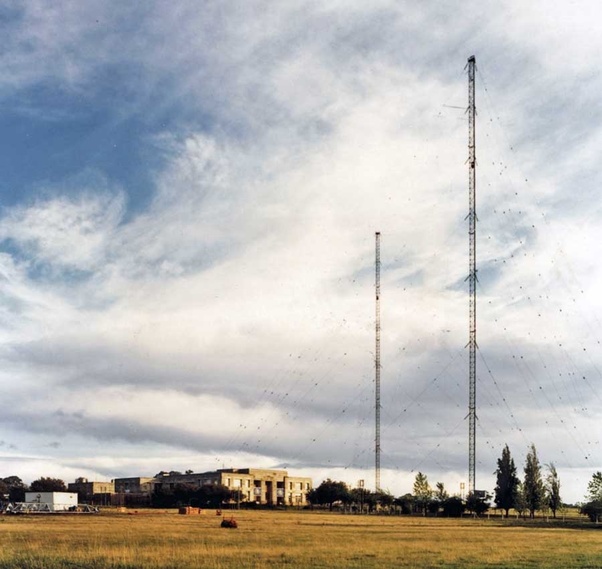
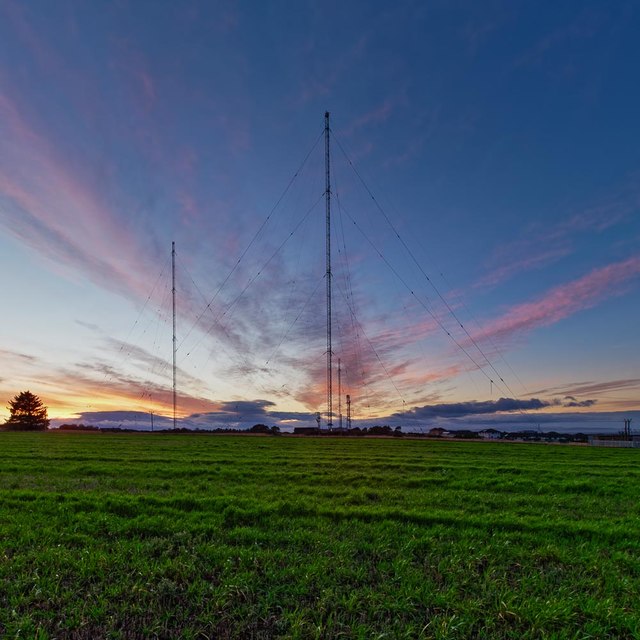
A new petition has been launched on the change.org platform, calling on the BBC and government to work together to keep BBC medium-wave, which had been slated for potential shut-down as early as 2027. This includes transmissions on Radio 5 across the UK, Radio Scotland and Radio Wales. The image at the top of this page shows the Burghead transmitter, which broadcasts both Radio 5 on 693 kHz and Radio Scotland on 810 kHz. The older petition to Keep Longwave also remains active, calling on the BBC to reinstate longwave transmissions, perhaps using the BBC World Service, as it can carry signals across much of Europe.

Medium-wave signals are significantly shorter than longwave, and cannot travel as far. However, they still retain many advantages over FM and digital broadcasts. Medium-wave can travel across entire regions of the UK, meaning that only 22 transmitters are needed to cover the entirety of the country with the national medium-wave signal for Radio 5 on 693 and 909 kHz. Indeed, two frequencies are used for this because the areas of coverage from the 22 transmitters overlap, and this helps prevent interference. Compare this with the 214 transmitters needed to provide national FM coverage. Overall, we would rate longwave as the best means of national broadcasting, but Medium-wave is a close second, as shown in the table below.

RadioLWMWFMDABInternet
RangeExcellentGoodPoorPoorExcellent
Rural availabilityExcellentGoodPoorPoorPoor
ReliabilityExcellentExcellentGoodGoodPoor
Speech qualityExcellentExcellentExcellentGoodGood
Music qualityGoodGoodExcellentGoodGood
Energy EfficiencyExcellentGoodPoorPoorTerrible
Cost to transmitExcellentExcellentPoorGoodN/A*
Cost to receiveExcellentExcellentGoodPoorPoor
Table: relative strengths and weaknesses of different means of broadcasting (*technically, the internet – e.g. BBC Sounds or ‘smart speaker’ – is not broadcasting and is not transmitted as such, as it requires a server to send information directly to a computer)

The long-range transmission of medium-wave means that it can reach many remote areas that FM and digital signals cannot, albeit not the extent of longwave. It also means that in the event of a local power cut which knocks out internet, DAB, FM and mobile signals, MW can continue to provide news and information – a feature that may be imperative in times of national crisis. Unlike longwave, medium-wave in the UK is broadcast from modern transmitters that are not likely to fail in the near future and do not need significant re-engineering to continue working into the future. Plus, a national MW channel is less energy-intensive and less costly for the BBC to broadcast compared to a national FM signal. For all these reasons we believe that the BBC would continue to support MW broadcasts were public support for the platform to be made clear.

The BBC suggested in 2022 that Radio 5 Live might leave Medium-wave in 2027, but in the intervening years no further announcements have been made on the subject. The closure this month of transmitters at Redruth and Folkestone in the south of England are not part of a gradual close-down of Radio 5 on medium-wave. Rather, these were top-up transmitters on low power intended to serve areas where coverage on Radio 5 was poor because of interference from medium-wave broadcasts from Continental Europe. With the end of those broadcasts, the Redruth and Folkestone transmitters became redundant and listeners have been advised to retune to Radio 5 from other nearby transmitters. ‘To continue listening to BBC Radio 5 Live in the Folkestone Area, please retune your radio to 909 Medium Wave’ says a message on the BBC’s reception website.

Many of those with older radios – including older car radios – would benefit from the continuation of medium-wave broadcasts, especially if they are fans of sport or seek a reliable source of news when travelling through rural areas. AM radio, including medium-wave, suits itself especially well to this use, providing a rich sound for spoken word programmes that is often preferred to the squeaky-clean sound of digital radio, and without the hiss and garble of FM and DAB in areas of poor reception. But it is in emergencies that AM radio comes into its own: in the United States, it is being mandated that new cars retain AM reception capabilities for this very reason.

At the campaign to Keep AM Alive in the UK, we would like to see similar considerations made by the UK government. As part of an upcoming Radio Review, we would like to see the continuation by the BBC of at least one nationwide medium-wave signal made mandatory for the sake of national security. We would also like to see frequencies for the BBC’s medium-wave services mentioned at least occasionally on-air, as was previously the case, so that the public remains aware of where to access these services. Telling people to simply ‘ask your smart speaker’ to play the radio will be no good in an emergency in the instance of a power cut or when fragile internet connections fail. Good old-fashioned medium-wave remains the best fallback option for nationwide broadcasts, and should be retained for this reason even if FM transmissions are brought to a close during the 2030s.

We would love to see the resurrection of longwave to provide nationwide radio coverage. In its absence, however, medium-wave remains the next best option. Please support our petition to keep medium-wave, and help keep the future of UK radio secure for everyone’s benefit.

28 responses to “Campaign begins to keep BBC Medium-wave broadcasts”

  1. inspiring26db9e4d72 Avatar
    inspiring26db9e4d72

    transmission on all wave bands should be kept, especially the long wave (which they’ve stopped)

    Like

  2. jovial41a5d83dc2 Avatar
    jovial41a5d83dc2

    Hopefully Medium Wave can be saved; it’s interesting how you say the sound quality for music is poor on AM; as a strong AM signal can sound better than FM. Also I’ve found that Polskie Radio One (225KHz) comes in fairly strong overnight and frequently plays music.

    Just tuning through the MW band on my Sony radio; it’s quite surprising how many stations can be received at night; both national, regional and from overseas.

    SquiddyGaming 🦑

    Twitter: http://twitter.com/Squidygame

    Website: http://151.244.232.25/

    Like

    1. t_thornes Avatar

      Yes, I rather prefer music on AM personally, especially on a good quality radio, but I believe that’s not an opinion shared by many, hence why Radios 1, 2 and 3 left AM in the 1990s but 4 and 5 stayed on it. Interested to hear about the Polskie Radio One reception!

      Like

      1. jovial41a5d83dc2 Avatar
        jovial41a5d83dc2

        I still think it’s interesting that those stations started off on AM; there’s some music stations on AM but most are either specialist music or possibly pirates.

        Polskie Radio One is quite a good station; although I can’t understand Polish.

        Like

      2. AMradiofan Avatar
        AMradiofan

        I’m sure there were many ex-pats who were sad when Radios 1, 2 and 3 went FM-only in the early 90s. Now Radio 4 LW has gone, leaving only Radio 5 Live and Talksport for European listeners. The BBC have even blocked international access to BBC Sounds (which many overseas listeners would gladly pay for at a time when the BBC are constantly pleading poverty)!

        Like

  3. Stephen Avatar
    Stephen

    BBC Radio 4 on 198 kHz was a lifeline in southern Ireland.

    What medium-wave transmission penetrates that den of iniquity?

    (Slight joke intended !!)

    Like

  4. Varyar Avatar
    Varyar

    Signed!
    I’m still trying to tune my radio to 198 kHz in the hope of picking up a signal. Will I be in for a surprise? It’s unlikely, but I really do hope that at least the medium-wave signal will remain on air. Perhaps I’ll manage to build a receiver sensitive enough to pick it up. I haven’t listened to the BBC since the LW signal went off the air.

    Like

  5. John Golding Avatar

    Stopping BBC shutting down Medium Wave Wireless broadcasts & eventually the transmitters

    Dear Tobias,

    I agree, stop the BBC doing this wrecking. BBC have already shut down longwave. 

    We pay for them but the BBC are arrogant. 

    Best wishes,

    John

    Like

  6. Robert Avatar
    Robert

    ht seem odd, but I can hear BBC MW from Northern Spain, and it’s not a dedicated receiving station. Just a humble XHData D-328, with pointer near 1000 in MW, from 23:00 Spanish time. It’s not as clear as LW but can listen to it.

    A pity if some stupid businessmen axe it as well

    Best regards

    Like

  7. deliciouslymoond7d8760ae9 Avatar
    deliciouslymoond7d8760ae9

    When the Longwave transmitter was closed we were told we would still be able to listen on FM… I live in France and there one receives French radio transmitted on their transmitter… I paid my licence fee every year from 1967 until I sold my UK home in 2024 and happy to continue for services. So as I live in an area that does not have good online signals I have said Bye, bye to my BBC listening after 77 years. The area of BROADcasting has ended and the new NARROWcast services has lost the BEEB many listeners… Vivienne kincaid

    Like

  8. Jonathan Snowden Avatar

    The closure of Radio 5 live on 909 and 693 has already begun. Even if they argue the sound quality is “not acceptable” the BBC should keep the option to use medium wave and perhaps use it for DRM broadcasting, which works well on a bandwidth of 9kHz. At the moment, Five Live in the car from our local transmitter (Barrow-in-Furness) is excellent. If I use my phone and bluetooth it to the car radio, I am at the mercy of poor mobile signal coverage, especially since the big phone companies switched off 3G, leaving areas like ours with a patchwork of 4G and 5G that dips without warning.

    Like

  9. AMradiofan Avatar
    AMradiofan

    I believe Medium Wave absolutely has a future, even though Long Wave clearly has the edge in breadth of coverage. I’m astonished that Long Wave never took off in large countries like the USA and Australia, given its natural ability to travel such vast distances.

    Medium Wave is a funny one. It travels further than FM broadcasts and is still better than FM for portable listening, but is somewhat prone to interference (particularly after dark). I’m in Wales but receive Radio Scotland on 810kHz far clearer than Radio Wales on 882kHz – possibly due to differences in transmitter power. Also, Radio Wales now only has one MW transmitter – the others were closed a few years ago.

    I get a strong, clear, bassy signal (comparable with ex-Radio 4 LW) from Manx Radio on 1368kHz, especially on the car radio, but Radio 5 Live on 909kHz is variable – suffering from intermittent but frequent echo, along with rising and falling volume (I believe this is a ‘ghosting’ effect caused by radio sets receiving simultaneous broadcasts on the same frequency from different transmitters which are ‘competing’ against each other). I can also pick up Radio 5 on 693kHz (presumably from Droitwich), which doesn’t have that ghosting, but it’s always been a far weaker signal for me than on 909kHz. 909 is very clear when I go to Yorkshire, probably because Moorside Edge transmitter is much closer there. I get Radio Cumbria on 837kHz very well during the day (it fades at night, while even Manx Radio suddenly disappears just after midnight). I can pick up TalkSport on 1053, 1071, 1089 and 1107kHz – the latter two are very clear at all times and much better than 5 Live, with 1089 being slightly stronger. I believe 1053 comes from Droitwich and 1107 from Wallasey, 1089 must be Moorside Edge and 1071 Wrekenton. (Source: https://tx.mb21.co.uk/)

    At certain times I can pick up the low-powered Radio 5 Live relay on 990kHz from Tywyn, as well as Radio Cumbria on 756kHz and Radio Caroline on 648kHz (which only officially covers Southeast England, though they keep trying to get Ofcom permission to increase the power).

    I always got a good Radio 4 signal on 720kHz MW in the car (similar quality to 198 LW), until the BBC removed Radio 4 from its MW transmitters a couple of years ago (another huge mistake!).

    Manx Radio is often my go-to in the car, they play a good variety of music – not just pop, but traditional and new-age Celtic (5pm Fridays on MW only), classical/light music (Thursdays at 9pm, FM/digital only) and there’s a very fun 1960s-themed programme (‘Carnaby Street’ on Saturday mornings, both frequencies). They also have regular news bulletins, covering UK and international news as well as Isle of Man issues. They do mention their AM frequency on-air (and sometimes even the 25kW power), but sadly their website indicates that they hope to retire the AM transmitter at some point!

    I think the BBC are far more hesitant of retiring Radio 5 Live on MW than they were with Radio 4 LW, because there is no other analogue option for it. If it closes on MW it will become a digital-only station. Also, because that station’s commercial rival TalkSport still has large MW coverage (despite shutting a few transmitters in the last few years, they have no plans to close the remaining 11), the BBC no doubt fear being placed at a disadvantage if they allow such closure. The BBC have, however, removed several of their local stations from MW. As you say, 22 transmitters for 5 Live is not a lot compared to 214 sites for FM (and a whopping 416 for DAB!), and the transmission equipment is modern, so it can’t be costing them that much. It’s a pity that LW at Droitwich wasn’t updated to solid-state, or it might still be running.

    It’s quite fun tuning to the MW band at night and being able to pick up stations from the Continent (I guess the waves travel further at night due to less sun interference). But those incoming foreign stations at night must be what causes increased interference with the domestic ones.

    Just about all analogue radios currently produced have MW, even car manufacturers are still incorporating it into their modern touch-screen radios, so let’s hope that one at least has a future.

    I’m no Luddite – in fact, my go-to speech station when there’s nothing on Radio 4 is Radio 4 Extra, which is (and always has been) a digital-only station. I recently installed a DAB adapter in my fairly old car so I can listen to it on the move. I’m also a regular listener of catch-up on BBC Sounds, on my phone or PC. I simply recognise the benefits of analogue radio and continue to take advantage of them when I can. Surely the ‘old’ and ‘new’ can co-exist?

    I think your petition should be on the UK Parliament website, as that would gain more traction and potentially have an influence on politicians. 10,000 signatures would trigger a Government response and 100,000 signatures a parliamentary debate.

    Like

  10. amstereofan Avatar

    It makes no sense in a digital age to keep BBC going on MW with a good national DAB and FM network available. The same goes for the waste of bandwidth talksport still hogging 4 frequencies on MW in 2026, absolutely ridiculous… I’m all for sensible and reasonable use of MW ie low power community stations on MW but it’s pointless national networks are still using the band…

    Like

    1. AMradiofan Avatar
      AMradiofan

      You obviously haven’t bothered to read the article. I believe all radio bands have their pros and cons, but MW has a lot to offer that FM and DAB can’t.

      Like

      1. amstereofan Avatar

        Of course I read the article. but did you bother to read what I said though ? When there are other higher quality more stable alternatives, then MW is not needed anymore. When there weren’t many years again then fine but this is 2026 and MW for a high powered network of transmitters however much less needed than FM is pointless. RNE Spain has sensibly closed down 6 months ago on MW so it’s long overdue 5 live and Talksport did the same

        Like

      2. t_thornes Avatar

        I would suggest that it is FM that is more redundant in many cases, as DAB essentially replicates it – good in urban areas, patchy in rural ones, same sort of sound quality, requires lots of transmitters. They also need a lot more power to cover the same area. AM is a completely different thing – needs few transmitters, serves rural areas well, cheap to transmit and receive.

        Like

  11. Dafydd Jones Avatar
    Dafydd Jones

    Not to mention the pros of shortwave! Often referred to,for good reason,as the “internet of it’s day. Shortwave transmissions covering vast distances can be picked up an on an inexpensive radio in parts of the world where there is no access to mobile phones or the internet or people just can’t afford it (you have to pay for it!). Unlike the internet it can’t be switched off by a regime although they can try jamming it,which can be difficult. Also,unlike a phone or a pc,a radio doesn’t log everything you do. Only today,while out walking,I was listening to China’s 24/7 english language service on my little Roberts radio. While not a fan of their government I just love the sound of analogue radio and it is heartening that China still recognises the reach of a technology often slated as outdated,”legacy” technology that knows no political or physical barriers. But I digress! AMradiofan makes some very good points and obviously knows his stuff. It seems to me that Radio Wales’ AM transmissions are another potential casualty (As is BBC Scotland) of all this obsessive drive to digital Reception where I live in Wales (Carmarthen) is very patchy. I often find myself switching to mono because of all the hiss that accompanies stereo transmissions. Only last night I was desperately trying to recover my DAB radio stations which had suddenly,mysteriously disappeared. DAB radio reception having to to be next to perfect,otherwise it’s either un-listenable or non-existent,wrestling with an aerial in this warm weather only made the experience even more miserable! AMradiofan mentions interference from continental stations. If you love MW (or loved LW) it is possible to buy portable radios which are specially designed to be sensitive to particularly weak signals and reduce interference from stations using the same or an adjacent frequency. The best ones have a range of filters. Depending on the degree of interference you can select a particular filter (the greater the interference the narrower the filter). All you have to do is press the button to select the appropriate filter. It’s that simple! Tecsun radios (not Texan!) based in China,are very popular with radio enthusiasts and can be bought online at Amazon (other outlets are of course available;but you won’t find these kind of radios in Argos or a town chain store). An affordable option is the XHDATA D-808 (Groovy name!) which only costs around £80 on Amazon and receives FM/MW/LW and SW (shortwave). It even has SSB (single side band) so you can listen to Radio Hams,who also love good old fashioned analogue radio! That said,while the technology inside is amazing for the price,I can’t help thinking the Chinese cut some corners on build quality (the mechanical side). The tuning control seems to be the achilles heel,so if you buy one (I just bought another) I would suggest keying in the frequency directly and only use the tuning knob when absolutely necessary. That aside,if you like listening to a distant station (or one outside your immediate area) on MW and your enjoyment is impacted by interference from another station (towards dusk or at night) a communications receiver with these capabilities can substantially improve your listening experience and level of enjoyment. Please note,I have no connection with these companies (I wish!) but the availability of such radios (and the mere fact that they are being manufactured) in the era of DAB radio and the internet does show that traditional analogue radio is not as close to dead as received opinion might suggest!

    Like

    1. AMradiofan Avatar
      AMradiofan

      Dafydd Jones: I definitely need to get one of those ‘enhanced’ radios. I did buy a second-hand Sony ICF-SW7600GR some time ago, as it had good reviews online as a ‘classic’ SW radio with SSB. However, I didn’t find it very good on MW and it was very battery-hungry and difficult to use! It’s recently died, anyway (only a few days after LW 198kHz was switched off).

      Like

  12. Mark Steele Avatar
    Mark Steele

    I work for Arqiva and my job depends on transmitters, with the LW now switched off and soon to be a complete MW switch off, how long will it be before VHF and finally DTT (Freeview) gets turned off. It has proposed by the BBC. Sky who now own ITV would also like to ditch Freeview.

    You can’t run a company just transmitting DAB for heaven sake!

    I and a lot of my colleagues will be out of a job and Arqiva will be even more broke than it is now.

    So save MW and bring back LW

    Like

    1. amstereofan Avatar

      Technology is always changing. I think VHF FM will be around for a good decade or so but ultimately I envisage all forms of radio and tv transmission will be via the internet / online as mad as it sounds right now so yes you’ll be out of a job eventually

      Like

      1. t_thornes Avatar

        Possibly true, but I hope not. It would be a shame not to be able to hear anything during a power cut.

        Like

    2. AMradiofan Avatar
      AMradiofan

      To Mark Steele: I sympathise, but the BBC appear to be blaming your company for LW’s closure. Quote from Radio 4’s ‘Feedback’ programme on 23.04.26:
      “The Long Wave infrastructure is owned and operate by a third party, who have advised the BBC that it’s coming to the end of its life as a technology.”
      I bet those valves, sourced some years ago from global stocks, could have gone on for another decade at least! What will become of them?

      Like

  13. Tony L. Avatar
    Tony L.

    One important point missing from your piece is communication during national emergencies. The world has always been in a state of crisis in various parts and this country is not immune. We know the use LW and MW broadcasts were particularly important during the last World War especially in keeping up morale in occupied Europe. DAB is effectively useless in this regard as is FM. Even in communicating to our own citizens neither DAB nor FM are suitable due to multiple power outages and securitisation of transmission sites. The Government (especially Leftwing Governments) love digital communications because they can control them by flicking a switch and therefore will continue to promote digital communication, cash etc. In my humble opinion, this aspect of National Security during a crisis is one that the Government should be forced to address before any further changes are made to AM transmissions in the UK.

    Australia have taken a different route recognising the dilemma of communication in a crisis:

    Why ABC Retains and Upgrades Traditional Radio

    During severe natural disasters like bushfires or floods, mobile phone networks and internet towers are often the first to fail due to power outages or physical damage. Traditional battery-powered or car radios do not rely on local telecommunications infrastructure, making them a lifeline for immediate emergency alerts and official evacuation instructions. To safeguard this, the government is investing millions through the Broadcasting Resilience Program to fortify these transmission sites with battery and diesel backups.

    Like

    1. t_thornes Avatar

      All very true, and we have made this point repeatedly in our communications with the BBC and on the website.

      Liked by 1 person

  14. Andrew Rutter Avatar
    Andrew Rutter

    An addenda since closure of the 3 LW Tx’s.
    Heard a couple of comments from acquaintances of difficulty hearing R4 FM. They’d realised that LW had closed down and their listening habit was a portable radio. Either ‘The Archers’ or ‘Today’ as the early morning programme for news. Had to move radios around with aerial extended to get a good FM signal, whereas LW was reliably there previously.

    The Australian approach with ABC radio upgrading AM for National resilience reasons ought to be the UK’s strategy.

    A problem with organisations outsourcing most or all important parts of their product is having limited control and/or knowledge of what might be the desire to asset strip. The financial managers are probably a different company, maybe overseas, with no interest in the product.
    If Australia can cover their vast continent with upgraded AM for a relatively small population, then refurbishing just the UK’s 3 LW Transmitters should not be beyond the finances of this G7 country.

    Like

  15. futuristicallyatomic0ebf1ea54d Avatar
    futuristicallyatomic0ebf1ea54d

    Music quality on long wave is NOT POOR, but good.

    Like

    1. t_thornes Avatar

      I agree with you, and I did change the table to reflect this.

      Like

    2. AMradiofan Avatar
      AMradiofan

      futuristicallyatomic0ebf1ea54d – Depends how you define good. Obviously it’s not in stereo and lacks the detail of FM and digital broadcasts, which is important for some audiophiles (notably classical music listeners), but not for most people listening on the go or in their car, or while doing housework – they prefer reliability of signal. I feel that music made before the digital production era (say, up to the early 1980s) often sounds better on the media for which it was intended: namely, vinyl records and AM radio. The 1960s pop tunes, jingles and adverts played by Manx Radio on their ‘Carnaby Street’ programme sound particularly good on MW! And while I’m a fan of the music of ABBA, I feel they often went too heavy on the percussion, which AM radio mostly filters out! AM does need some extra bass, though, to sound really good and compensate for the lack of finer detail, which a good receiver will obviously manage well.

      Like

Leave a comment